What is Programmatic Advertising?

The advertising world is full of jargon, and new phrases are always popping up. One you may have heard in the past couple of years is “programmatic advertising.” So what is it, and why does it sound so technical? Take my hand and come with me to the world of advertising, where we’ll venture further in to discover the kingdom of programmatic advertising.

If you’re a complete newcomer to the advertising world, let me set the scene for you. The way ads make it from your business to a little 300×250 box on your screen is that a media buyer from an advertising agency bought that space at that time for that specific ad. The way the media buyer decides on that specific part of space-time to buy for the ad is much more complex, involving the consideration of price rates, target audience demographics, formats and more. If some of you thought “is there an easier way?,” you’re not alone. The advertising world wondered the same thing, and programmatic advertising was developed as the answer.


The programmatic advertising kingdom & RTB

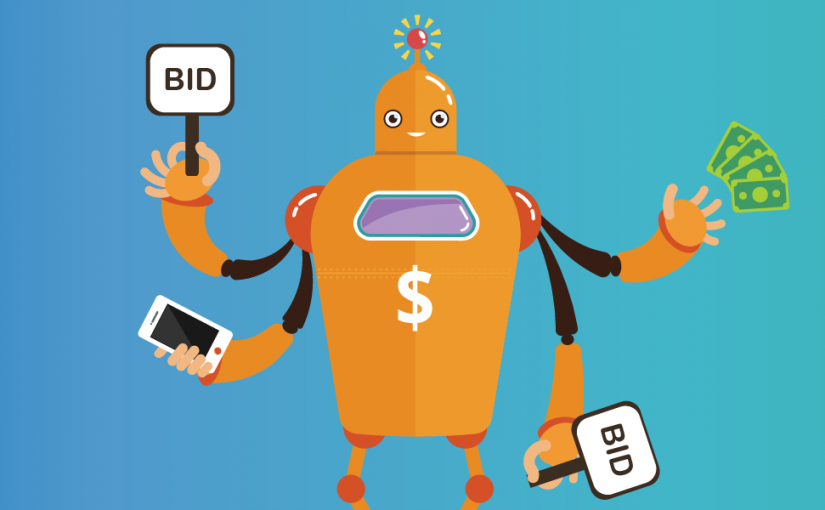
Programmatic advertising is when software is used to purchase digital ad space instead of humans. Move aside human media buyers, robots are taking over! Swapping out humans for machines is a win-win for advertisers. Creating ads and choosing the right space takes a lot of manual labour. The complex considerations that went into each bid and purchase of ad space can now be done in milliseconds by efficient, calculating machines. The bidding of ad space can be automated, and by telling your programmatic software exactly what kind of audience you’re trying to reach, the ads can now be targeted more efficiently than ever. Welcome to the programmatic advertising kingdom.

RTB: real time bidding

Before we dive too deep, let’s take a quick detour into RTB forest, where ad spaces grow on trees for the robots to harvest. The phrase RTB (real time bidding) is often used interchangeably with programmatic advertising, but RTB is actually only one part of the process, and the skeleton on which programmatic ad buying is built. Ad space is bought and sold in a digital auction, where the winning bidder gets to display their ad in that space. This happens in real time (hence real time bidding), and it’s what programmatic advertising software uses to purchase ad space. To clarify, RTB is the auction, and programmatic advertising is the full automatization of the bid, purchase and ad displaying process. Okay, let’s get back on track to programmatic!

In the programmatic advertising kingdom, it’s the machines that do the work, and the advertisers who rule from campaign castle. It’s the human advertising professionals who are the kings and queens, ruling from campaign castle, and they set the laws of the land. The advertisers determine the rules and scope of the campaigns, while the programmatic software handles all the menial tasks. They will set the prices and strategies, carefully select the channels on which to promote, develop meaningful campaigns, and more. No technophobia necessary, humans are still deeply involved in the process.


Why programmatic advertising?

Here’s the rundown of why programmatic advertising is the best kingdom to be a part of in the world of advertising:

Efficiency

We all know humans, right? No matter how many great qualities they have, there’s always a degree of unreliability and room for fault. Robots don’t get sick, don’t need vacation time and can’t break the rules. While I’d much rather have a human coworker and friend than a robot, when it comes to buying and selling ad space, these things matters. Programmatic advertising removes slow-computing humans from the equation, making the ad buying process hundreds of times faster, and less likely to involve error. Plus, the programmatic advertising software can make tiny, instant adjustments to campaign variables that humans may not consider, or have the time to change.

Optimization

Robots are far better data analyzers than humans, and programmatic software can adjust dozens of variables within your campaign outlines to optimize the campaign and get your desired ROI. The human side of marketing can set budget, goals, network reach and more, and the programmatic software will run with it to get the best bang for your marketing buck. Say hello to delivering hyper-relevant, cross-channel experiences that increase brand awareness, reduce churn and convert users at break-neck speeds.

Cost

Why hire an expensive, potentially unreliable human to buy and sell ad space when you can get a machine to do it better, and for less? Adopting programmatic advertising will result in a tangible cut of media buying costs, as well as let you budget out your (less-tangible) brain power more efficiently. Not to mention, with a machine at the helm, your campaigns will achieve better ROI than would be possible with campaigns run by their human counterparts.

Campaign Quality

With the tedious tasks handled by programmatic software, your marketing team has the time and energy required to develop strategic tactics, and plan sophisticated, effective marketing campaigns. Each of these complex campaign plans will be carried out by the programmatic software that has the ability to rapidly change tiny variables to get you the best bang for your campaign buck. After each campaign run with programmatic advertising, you’ll also receive detailed, data-filled reports so you can better plan your next campaign.


Who needs programmatic advertising?

We all know that you don’t bring a human to a robot fight. In the digital ad buying world, it’s machines vs machine, and ad space is bought and sold faster than you can blink an eye. Programmatic ad buying can offer hyper-relevant, hyper-targeted display ads to the audience you want to reach. If you want to run display ads online, you’ll want to use programmatic ad buying. Besides, human interaction is so 20th century.


Programmatic advertising is big, and it’s not something that will disappear in the next few years. According to a study from eMarketer, US programmatic digital display ad spending will reach $22.10 billion in 2016. The kingdom is expanding, and overtaking new advertising territory every day. Digiday even called programmatic “the future of ad buying,” so maybe a world of robots and humans living in harmony is more plausible than Terminator had us believe.

Tips for Providing The Perfect Customer Experience

Amazing customer service may seem like a lot of extra work on a short-term basis, but it does improve your brand image and goodwill, which means a lot in the long run. No matter how big or small your business is, you must focus on making your customers happy. There are many ways to do this—with the strength of your product, with free incentives that you can offer or with amazing customer service experiences.

With all the competition out there, succeeding with your business nowadays is a matter of wills. Are you willing to provide the best possible value? Are you willing to offer your customers the perfect customer experience? If you are, then it’s time to get started at improving the customer service experience your company provides. Here are a few important tips to help your company provide your customers the perfect customer service experience.


1. Know your products and services inside and out

No matter the business or industry you’re in, knowing your offerings (products or services) inside and out is absolutely necessary. Customer service is, after all, all about helping your customers succeed with your products or services. Therefore, your customer service should focus on offering the proper suggestions, tips and solutions to ensure that success. Each and every employee (not just customer service) should know the ins and outs of what you’re selling. Helping your employees succeed by providing the proper training (regardless of their job description) is the first step in helping your customers succeed.

2. Be more accessible

If you want your customer service department to strive for success, here’s what you should know—customer service must be readily accessible to all of your customers. One easy way of accomplishing this is setting up more communication channels in which customer can connect with a customer service member when they have a question or issue. The minimum that you can do is to provide a phone number, an e-mail address and a mailing address. If your business can afford it, and really need it, develop an online support desk that can be instantly reached 24/7. This communication channel is usually required when the company reaches a big number of requests and website visitors.

3. Speed up your response times

Customers love quick answers. According to a recent report performed by Frost, 41% of customers suggest that their biggest frustration regarding customer service is when they’re put on hold. They want to be respected, and your company must give your best to solve everyone’s issues quickly.

4. Focus on the customer, not on the sale

Customer service is all about the customer’s feelings and experience. You must focus on their well-being and you must avoid thinking about combining customer service with sales or other aspects of your business. If you want to leverage your customer service system in order to make more sales, I’m sorry to disappoint you: it’s not that effective! The selling side of your business is totally different and you should focus on it separately. Continually work at ways that you can improve the customer experience to keep your customers satisfied and coming back for more.

5. Clear communication

Keep communication simple and ask straightforward questions when communicating with your customers. The truth is that we all communicate differently, so be prepared for communicating with your customers in different ways to ensure that they will understand whatever information you are trying to relay to them. If corresponding by email or online, grammar and spelling must be perfect or your credibility as a professional company will slowly vanish.

6. Over-deliver whenever possible

Over-delivering can help create loyal customers. On average, loyal customers can be worth 10x more than their first purchase. If someone gets treated right, they’ll often come back. They’ll perceive your company as a trustworthy authority or provider; therefore, over delivering from time to time helps your company’s reputation to grow positively. Find a way to reward your customers with a customer service issue for being patient. It could be anything. Nothing costly or hard to obtain. Ideally, this small attention should also deliver some value.

7. Find and fix your mistakes

Mistakes are a part of any business, after all we are all human. Nevertheless, do your best to make things right with your customers. When we’re talking about mistakes, we’re talking about a customer that hasn’t been treated right. Your business can make it right by offering them solutions, returns or future guarantees. Pay attention: if you’re not fixing your mistakes in time, your company’s reputation will suffer. People will start talking, reviewing, and sooner than later you’ll realize that your sales are dropping.

8. Test, fail, test again and ultimately optimize

Before reaching success in a customer service program, every business goes through a trial-and-error process. The marketplace and the customers within any industry tend to become more complicated as an industry ages or becomes more fragmented. If you try out a new product, service, or customer service initiative, don’t be afraid to fail. Know that “failure” isn’t failure, it is merely feedback—it lets you know what not to do so you can start focusing on things that might work. After you find something that works, begin the scaling process. Optimize everything until you find the balance that you’re looking for.

Conclusion

Businesses are always looking for new ways to make a name for themselves and an excellent customer service experience is one of those ways in which a business can afford to get a great reputation in. Competition is almost always growing in any industry and new strategies and actions must be implemented to keep up with the constant flux. Providing the perfect customer experience is just one way for your business to stand out from the crowd, win customers over and keep them coming back. It’s never too early or to late to create a customer service program that turns your customers into repeat customers, or ambassadors of your brand.

Digital Customer Service: the 10 Cornerstones

Customer service is about solving the problems of your customers. Now, companies have to manage customer service across multiple channels. When people have a negative experience online, they blame the company. Not responding to customers on review sites and social media is worse than having a phone line that goes unanswered, because there are thousands of people witnessing the neglect.

Whose job is customer service? The truth is, customer service is the responsibility of everyone in your company. Building a brand means delivering on a promise again and again. It means consistency and maintaining effective customer relationships.


The 10 cornerstones to success in digital customer service

1. Respond to reviews quickly

When customers take time to leave a business a review, it’s essential to respond in a timely manner. Nearly nine in ten consumers read online reviews to determine the credibility of a business, and it’s important they see that the business has an active, responsive voice. Not only will other people who visit the review site see the response, but it’s possible those people could share the review and response with their own networks. All reviews should be acknowledged by your business. The only exception to this is star-only rating reviews. These are permitted on Facebook and a few other top review sites.

2. Provide a consistent experience

Depending on the type of product or service that you offer, customers may interact with several people at the company before the final transaction. Your business needs to make sure that throughout the entire experience, that your customers are having positive interactions. The same story should resonate throughout your customer service efforts, and that story should be customer-centric.

Apple is an example of a company that provides a consistent experience throughout their customer funnel. From their website with its sleek, minimalist design to the simple and elegant phone you take home, Apple products and website offer a cohesive experience.

3. Experience your customer journey

Most businesses have put together their online presence somewhat piecemeal—create an account on one social platform, add chat integration to the website, build a blog, expand offerings, etc. While this is the most common way to build out a business, it doesn’t always equal the most seamless customer journey. Go through your buyer’s process. Search for yourself online, look at the website content, sign up for the newsletter, etc. Note any bumps and bruises you find along the way and how you can make the whole experience more cohesive.

4. Use social media as a two-way street

Perhaps the best thing about social media is that it means a sort of democracy for customers and businesses alike—everyone is on the same playing field. While social media can be tiresome, let’s be sure we don’t ruin one of the best things about it—the fact that consumers can have conversations with businesses. Share helpful content, engage with consumers and occasionally share promotional info about your products or services. Asking questions, holding competitions and sharing content relevant to your audience are all good ways to engage with consumers. Don’t just talk, listen.

5. Have a high performing website

People visiting your website are not patient so your business needs to have a webpage and assets that load quickly. Nearly 50% of consumers expect a page to load in two seconds or less, anything longer than that, consumers start dropping off. The abandonment rate for viewers waiting to start up a video is a steady curve up and to the right. When website visitors have a poor experience on a company website, they blame the company, not Google, wifi issues or whatever else may be the problem.

6. Open communication and transparency

Consumers can detect sales-y language from a mile away. It’s best to be direct about your offerings, and even your shortcomings. Nail your sales approach and provide consumers the information they’re looking for. Even if you are unable to solve every problem your customers have, they’ll appreciate your honesty and will be less likely to leave. Set your brand voice, share your truths. Being honest with consumers, even if it appears to be a negative, usually pays off.

7. Get your listings right

Having a thorough understanding of listings is essential in the digital space. Getting business listing information accurate (name, address, and phone number) across the web, though, is one of the most important things your business can do to create a better digital customer service experience. There are many important directory and listing sites. Also, having correct listings with the four major data aggregators (Factual, Acxiom, Neustar-Localeze, and Infogroup) is one of the keys to disseminating accurate listing data across the web.

8. Positive attitude

The power of a positive attitude and its influence on customers should never be underestimated. Optimism is a cornerstone of customer service. Small changes in language and wording can make a huge impact on customers:

  • Option one: I’m sorry, we won’t have that product in our software this month.
  • Option two: That functionality will be available at the beginning of next month! Our development team is hard at work on a few other features that are useful to you, as well….

Abrasive or abrupt language is very off putting in customer service, even if it is not directly rude or negative.

9. Use email effectively

Make sure when you email your customers, that you have something to say. The communication should be timely, relevant and helpful. Having an effective call to action is essential—give them a reason to read and engage with the email. An automated newsletter is fine and can be a good piece of communication, but never have a do not reply email.

The heart of digital customer service (number 10)

Your customers may say they want the best product, and that they want it at the best price. While that is true, what they want most is authenticity. Authenticity is delivering on a promise. Authenticity is consistency. Authenticity is digital customer service.

What is Content Marketing and Why Does It Matter?

In the heyday of traditional marketing, attracting and retaining customers was an intimidating task for local business owners to accomplish, especially when the inflated budgets of larger businesses made it difficult to compete. Today, there are many different avenues for business owners to interact with consumers, and social media makes it easier than ever for business owners to reach potential customers through strategic tactics like content marketing.

Content marketing, also referred to as inbound marketing, involves the creation and distribution of relevant content that provides value to your business’s target audience. Content marketing can be shared with consumers in numerous forms: infographics, ebooks, white papers, case studies, how-to guides, etc. The main purpose of content marketing is to offer consumers value by presenting a solution to their needs, thus influencing the buying cycle.


Content marketing and the buying cycle

The main difference between traditional marketing methods and content marketing tactics is how each strategy affects the buying cycle for consumers.

The benefits of pull vs. push in marketing

Traditional push marketing methods like flyers, billboards or commercials seek to influence the comparison and purchase stages of the buying cycle by promoting or offering incentives that make a product or service seem superior to alternative solutions. Content marketing, or pull tactics, aim to increase consumer awareness and provide helpful information about the product or service your business offers as a solution. The beauty of content marketing is that it may lead consumers to recognize a problem or need in their lives that they would have otherwise been unaware of. This will draw them into your business when they are ready to buy, rather than knocking on doors or cold calling to try and convince someone to buy something from you now. Utilizing content marketing tactics in your business’s strategy also introduces several benefits, many of which are long lasting.


The benefits of content marketing

Content marketing serves as a means for your business to attract, inform and engage with consumers. Here are some of the benefits that can accompany an effective strategy:

Brand awareness

Publishing valuable content will lead consumers to discover your business and product offerings as they search for solutions to the problem they are facing. By making content available to consumers, your business will communicate an awareness of consumer needs, humanizing your brand with a personality that is friendly and helpful, as well as creating the opportunity for customers to form a relationship with you.

Brand equity

Content that is relevant to the needs of consumers and offers them a valuable solution establishes your business as a thought leader in your industry, which helps build a trusting relationship with consumers. Attaining this level of credibility will lead consumers to prefer your goods and services over alternative solutions, since they are aware of the unique value proposition offered by your business: that you are the knowledgeable experts in your field.

For example: why do avid cyclists go to smaller specialty bike shops instead of a big box store that offers bikes? Because of the level of knowledge and expertise that the smaller shop offers is something that cannot be easily replicated by the bigger box stores.

This is example is similar to how content marketing can work to increase thought leadership and brand equity for your business. By sharing your expertise in the form of content, you will boost your credibility with customers. They know that they can come to you for solid advice because you have provided them with relevant, helpful information in the past.

Effective long-term results

If the content your business releases is designed to be a mix of time-sensitive and evergreen pieces, your business’s content library will still be relevant to consumers as time passes. High-traffic content will also improve search engine rankings, and the consistent release of content can serve as a continuous source of interested consumers.


Content marketing: the main sell

Content marketing is an effective strategy to interact with consumers and introduce them to your business’s brand. By providing consumers with value before they even visit your store, you are building positive relationships and connections to your brand, resulting in long-lasting customer loyalty and brand equity for your business.

How to Use Paid Ads to Grow Your Facebook Following

So, you’ve got your Facebook Business page setup and you’re posting regularly. You’ve even got some likes and shares. That’s great! But why stop there? With over 1.79 billion users active on the platform every day, there’s a lot of real estate to cover, and your content can only reach so far without a little help. That’s where Facebook Paid Ads come into play.

Let’s start with the basics.


What is a Facebook paid ad?

According to Facebook, “With Facebook Ads, you can create targeted ads to reach different audiences and meet your business goals.” It seems pretty straightforward, but let us elaborate.

Facebook Paid Ads are a simple and cost-effective strategy for your business to reach a specified demographic. You can promote your custom ads and content to reach an audience of your choosing. What’s more, you can use the ads to collect data that will help you improve the ads to increase their efficiency.


How to build an effective Facebook ad

When you’re building your ad, there are a few important factors to consider:

Choose your audience

Deciding which demographics you want to target is one of the most important parts of optimizing your ad. Choosing a broad range is effective for some businesses, but you’re more likely to see results by narrowing your terms. For example, if you’re selling video games you might want to target men and women between the ages of 15 and 40 with interests in video games and entertainment, since that’s where your customers are likely coming from. If you’ve optimized your audience to your business, you’ll reach people who will want to follow your page.

Create a compelling message

Your Facebook Ad has limited space, so make sure you’re saying exactly what you want to. Are you offering a deal? Hosting an event? Showcasing products? Make your message relevant to your audience and give it a call to action! Don’t forget to add an image, too. Ads with photos are much more likely to attract attention than those without.

Switch it up

Why make only one ad when you can make two? Creating more than one ad gives you multiple sets of analytics so you can determine which ads work and which ones don’t. If you find your ads are working well, it’s still important to switch them up every so often so the message doesn’t stagnate. People get tired of seeing the same thing over and over again, so keep it fresh!


You’re all set to get started! Facebook Ads are a great way to get your products and services in front of potential customers. Facebook has some great resources to help you get started. Even a low ad budget each month can help you attract new customers and find new business. Although Facebook advertising is extremely important, creating and running ad campaigns can be a time consuming project. Consider using our Digital Advertising, and with our reporting, you’ll be able to clearly see the ROI and what you’re getting for you $$.

5 Reasons SEO is Essential for Website Success


SEO, or Search Engine Optimization, is a term you’ve most likely heard before. As digital marketing continues to rise, so does the contest for web visibility. If potential customers can’t find you online, you’re missing out on a huge demographic. That’s why we’ve narrowed down five important reasons to use SEO.


1. Website traffic

Traffic is the most important focus of a website other than web design. Up to 64% of website traffic comes from organic search, so if you’re not using SEO tactics, you’re not getting found. The internet is a sea of information; it’s easy for customers to get lost and distracted. Search engines find your site using crawlers that identify key phrases, then index them for users’ organic searches. If these crawlers can’t find your site, neither can potential customers. And if people don’t find your site, they’re not going to sign up for your newsletter or see your sales.

2. Competitive edge

SEO isn’t new. Most businesses are familiar with it and its importance. It’s very likely that your competitors are already using SEO, which is all the more reason for you to get on board with a strategy of your own. And if you’re focusing on local SEO, the playing field is much smaller. Local search is becoming more and more important, and finding your niche can put you ahead of competitors focusing on a broader scale. Now’s the time. The longer you wait, the more you risk other businesses cementing their positions and keywords.

3. Better rankings

When over 70% of clicks happen on the first search results page of Google, you don’t want to be past page two. That means that over 70% of users find what they’re looking for on that first page, which is why you need to use SEO to get there. Using local keywords and having up to date location information are two important steps to take to get Google to notice your site. Be aware of bounce rates, too. If your site doesn’t offer a good user experience, it won’t rank as well.

4. Mobile

Speaking of the user experience, one of the most important factors of website success is whether or not it’s mobile responsive. Responsive web design keeps your HTML and URL the same on web and mobile devices. Google favors websites that are mobile responsive, so take that into consideration when forming your SEO strategy.

5. Inbound marketing leads

SEO and inbound marketing work hand in hand. And while some inbound strategies require lots of attention, SEO requires initial setup, but can then work on its own for awhile. It’s an affordable method of bringing in business. What’s more, effective SEO brings customers to you. You really can’t go wrong.


SEO for ROI

You know why SEO is important for the success of a website and your business overall. Being found in search is one of the best ways to find new customers when they’re seeking out your products or services. While SEO is increasingly important, maintaining rankings and working to constantly push out competitors is an arduous process. If you don’t have time to stay up-to-date on Google’s algorithm changes, cleaning up meta data, keyword research and link building, consider outsourcing to someone who has this as their main focus.

How to Avoid Having an Ugly Website

Websites are important for every business. In today’s digital age, having accessible online information is crucial for success. Just having a website isn’t enough, though. What matters is what’s on your website.

Website content needs to be geared toward making the consumer want to interact and engage with it. So, let’s take a look at what not to do when creating an appealing website, and I’ll show you what you should do instead along the way.


You’ve read this far for one of three reasons:

  • You want to learn how to optimize your website for the best consumer engagement and interaction
  • You’re worried that your website is ugly and came here for peace of mind that it isn’t
  • You had nothing better to do and the catchy title of this article made you blow a little air out of your nose, which, in today’s digital age, translates to one “lol”

No matter the reason, you’re here for a solution, so let’s dive right in. Before we discuss any more, take a look at this website: http://thebiguglywebsite.com/. Don’t worry, it’s safe for work!

Are your eyes bleeding yet? I wouldn’t blame you.

We know your website can’t possibly look this bad, and we also know that this website is TRYING to look bad. Now, what are the chances you scrolled down to see what was listed on this site? If they gave out a million dollars at the bottom for clicking a link, chances are that you wouldn’t have walked away with a penny.

Why is this? Consumers don’t want to engage with unattractive content. Think of your own website content for a moment. If somebody looked at it and felt the same way you just felt, do you think they would stay and interact with it? Probably not.

Start by thinking of all the things you’ve hated on websites you’ve visited in the past. Chances are, one or more of these was on your list. If they weren’t, they will be now.


1. Ugly domain

Do you find it easier to go back to a website with a simple domain like website.com (an example), or do you prefer to type in randomwebsite123.org/data0=184/net%/ (another example)? You may be saying, “But hey, I just Google the name and click on the link!” Sure that might work for you usually, but would you be happy having to find your favorite and most visited websites by Googling them every single day? You’re better off having a website that people can remember if they choose to. A consumer’s first impression of a website is largely design-related, so don’t you think some of the people in that category want to see a neat and tidy domain? Of course they do!

2. Long loading times

I considered leaving a bunch of blank space here so you would have to scroll down and waste your time to prove my point, but I decided to make you read this sentence instead.

Consumers hate waiting. This is the digital age of instant information. It takes consumers only a split second to form an opinion about your website. That tiny amount of time shouldn’t be spent on a blank loading screen! Even worse than that, if there is a long loading time every time a consumer tries to interact with your website or navigate the different pages, they are going to get increasingly annoyed.

Here is the worst case scenario: You have a consumer who is ready to buy from your online shop, they start gathering up products into their cart, then they get fed up with waiting and instead buy from your competitor. Want to avoid the tragedy? Keep it fast!

3. Complicated or overwhelming interface

Does your website have too many buttons on it? Are people being bombarded with information? People are being trained to ignore huge amounts of website content due to websites crawling with ads. Keep it simple and focus on important topics or focal points that they can engage with. With plenty of consumers abandoning a site due to poor design, you can’t afford to hide your crucial information in text-garbage. Don’t lose consumers because they can’t find where you hid the crucial information on your jumbled page.

4. Automatic music or videos

Many people listen to music while they work or surf in their free time. If you’ve ever noticed a little speaker icon on the right side of your internet tabs, it means that sound is coming from that page. Many people’s first instinct is to kill that tab because it’s forcing disruptive sound onto their experience, and autoplaying audio or visual content can cause valuable consumers to leave your site.

If you have videos on your main page, great! Just make sure you let people click the play button on their own. At the very least, it will give consumers a chance to silence their other music and video sources before they listen.

5. Website doesn’t scale

Do you always look at a website on your computer, or do you sometimes use your phone or tablet? Don’t you hate it when you’re interacting with website content on your phone and you have to scroll all the way to the right to read the full line and then scroll all the way back for the next line? It’s terrible! Make sure your website bends and twists to fit every screen—this is called responsive web design, and it’s very important. If people don’t realize your website actually operates differently on their smaller screen, you’ve done something right.


Your website content is one of your most important marketing tools. Whether or not people engage can mean the difference between one dollar and one million dollars in revenue. It’s worth it to take the time to make your website beautiful.

What is Online Reputation Management?

A business’s reputation used to be what they said about themselves in their advertising and the reach their customers had via word of mouth. Now, consumers are pushing out a company’s reputation and image collectively by providing real-time feedback online through review sites, social media, forums and other channels. Basically, if it is an online source and a consumer can say something about a business on it, then it is a channel where your business’s reputation should be managed.


Digital marketing and online reputation management for businesses

Online reputation management is a part of a greater digital marketing strategy that works alongside review management, business listings, paid search/ads, social media management and SEO to help your business stay competitive and relevant online. While your business should be managing each of these segments of digital marketing to maintain your online presence and (consequently) offline reputation, many businesses are not. They really should: four in five consumers surveyed use search engines to find local information from multiple devices to find store address, business hours, product availability and directions.


Online reputation management: your business has options

Your business’s reputation can be affected at anytime on just about any source across the web. You can use products (SaaS), services (outsource services) or people (outsource or hire a digital marketer) to cut down on your reputation management time expenditure. Even if your business tracks and constantly checks on social media, there may be sources that your business is unaware of such as a new review site from a listing that your business never knew that existed.

Your business should weigh the pros and cons of conducting online reputation management in-house or outsourcing, but there are definite best practices when responding to reviews that your business should be aware of. Maintaining your business’s online presence is one of the most worthwhile services a digital agency or local media company can provide your business and is one of the most worthwhile services you can invest in.


Why your business’s online reputation matters

An online reputation needs to be backed by reviews and ratings by consumers. Without them, there would be no reputation to manage and quite frankly, it would appear as if no one ever visited the business.

Ready or not, consumers are talking about your business

Whether a business chooses to manage their reputation online or not, consumers are talking about their favorite and not-so-favorite businesses. If a business simply ignores their reputation online, the consequences can be detrimental.

Unmanaged negative responses can create an angry mob mentality and bad word of mouth spreads like wildfire. While a business may not realize how exactly one instance can affect their online reputation, it is possible that only one negative post on a highly ranked site can actually be what shows up near the top of a search results page when a consumer searches for that business’s name.

Consumers Control the Conversation and Everyone’s Feedback Matters
Social media is a two-way conversation — businesses can no longer broadcast the message they want people to see. There is a democratic nature to social, with brands, consumers and everyone having an equal voice in a shared space. Customers can rave about a business or let everyone know they had a terrible experience. Social networks have dramatically changed the way businesses communicate. Today, consumers can converse with brands and vice versa as if they were talking to a friend. As a result, businesses have had to become more personable than simply a business entity and manage their social presence in a manner that reflects as such.

Reputation drives conversion

What people see online matters. Approximately 74% of customers trust online reviews as much as personal recommendations—this is a huge shift in thinking that has become more prominent as time goes on. This trust in reviews translates to dollars, as customers put their money where their trust is. A Harvard Business School study found that a restaurant that sees a one star increase on Yelp will see revenues increase anywhere from five to nine per cent.

As discussed previously, many businesses find that cultivating their digital profile on their own is too time consuming. There are reputation monitoring tools that make keeping up with customers way easier, saving time and money. Whatever your business does, it is essential that you are not perceived to be ignoring your customers online. The worst thing your business can do is appear unresponsive.


What makes a good online reputation?

Being present (listed online) and having a good reputation (reviews and reputation management) go hand in hand. Not being listed on a reference site customers use is just as bad as having bad reviews on that site. Building a consistent online presence and a positive reputation is important for both consumers and search engines. Some of the most important aspects of the online footprint include:

  • number of business listings
  • consistency of business listing information (name, address, phone)
  • overall sentiment in reviews
  • frequency or current velocity of new reviews
  • overall volume of reviews
  • social activity and engagement (especially with reviewers)

Customers now view social recommendations and reviews as more authentic, expecting \\reviews to be a mirror of the actual customer experience that they would experience themselves. This means that maintaining your business’s online reputation is gaining importance as each review is a perceived snippet of what your potential customer expects to experience.


Online reputation management: the main sell

According to Google, 9 out of 10 of local searches lead to action, with more than 50% leading to sales. If businesses have a good web presence, customers will go to them rather than the competitor. Once they’re in the store, 79% of customer use their smartphones inside to look at reviews or compare prices and 74% of them end up making a purchase. Those numbers alone make the opportunity clear: online reputation management is essential for your business to get consumers in the door to make the sale.

Business Website Essentials

Telling a small business owner to “assume the perspective of your customer” is one of those classic easier said than done problems. It’s not for lack of trying, but owning a small business isn’t just a job, it’s a lifestyle. And when you put that level of passion and commitment into something, your unique familiarity with it can be tough to shake.

Yet this is the simplest way to quickly optimize your website. By deeply considering your customer’s perspective and buying journey, we can make decisions that put everything in the right place for the customer to easily and quickly complete their interaction with your business and maybe even leave a nice review to boot.

While it’s absolutely essential to have each of these elements be part of your website, the specifics of their presentation need to be in consideration of your specific customer demographics. Most notably will be the difference between information on an online store, where the priority is to drive sales, versus a traditional brick and mortar business, where the priority is to get them to visit you.


The must haves

Contact information

Much of your web traffic will be coming from customers looking to use your website as a tool to communicate with you. Whether by email, phone or in person, the information that helps them accomplish this needs to be a top priority. Placing an easily found “contact us” link in the top right corner of your website is never a bad move. But if your customers aren’t web savvy, consider putting your address, phone number and hours of operation right on the home page. Additionally, if your business location is a little off the beaten path, consider using a map application on your website to help people better understand your location.

Product information

This is a growing priority for small businesses online, as a huge number of searches now happen on mobile with the intent of “in the moment” product research, sometimes even in-store. This means that the more specific information you can have online about what you sell, the better. This may even lead to customer conversions while they are in a competitor’s store.

Keeping an up-to-date and functional product catalog online can be a lot of work, but it is most certainly worthy of consideration given the potential value. This is particularly important if your demographic skews younger and more web savvy.

Business description

Give a quick, easy-to-find snapshot of your business and history available for people interested in learning a little more about you. Keep in mind, if people are looking at this part of your website, they are likely close to buying. Make sure you put in a little marketing effort here to help seal the deal. Make it concise but include things like business history, location, relevant achievements and philosophy. It’s also not a bad idea to include customer testimonials if you have them.

Quicklinks to social channels

Social platforms like Facebook, Instagram and Twitter are all great tools to help foster a direct line of communication between your business and its biggest fans. Your website should prioritize getting those follows and likes as easy as possible by installing a quick link widget into the footer or header of your website. That way, no matter where you customer goes on the site they are always one click away from connecting with you on Social.

Content/media

It’s becoming more and more common to see small businesses feature active content strategies and it’s easy to see why:

  1. Content is authentic – No one likes being sold to, and content is a great way for a business to build a relationship while leaving the hard sell on the shelf.
  2. Content is made for local – A good content strategy can help a business establish itself as grounded in its local area through authentic stories that are for and about their community.
  3. Content is hyper-targeted – Based on how you answered the first three questions your website, at least a little, is likely targeting customers at a specific part of the sales funnel. Having a fully realized content strategy allows you to add balance to your site. For example, if your site is designed to drive new sales, perhaps the content can be targeted towards customer retention by adding value to those people already in the fold.

Easy content strategy win = how-to videos

These can be extremely effective and easy to produce. Plus, creating how-to videos gives you the platform to demonstrate your expertise. Double-win if it’s related to your business.


Putting it all together with design

When considering design and layout, it’s completely appropriate to look at it as an opportunity to infuse some of your business’s personality into your website’s look and feel. But heed this warning: design is where it’s most critical to consider the customer’s perspective. Too often small business owners create a website that works perfectly for themselves while failing to consider how it will work for their customers.

Here are two top level considerations when choosing a design.

Mobile functionality is king

This has to be top of mind at every stage of design. While most modern design templates are mobile functional, it’s worth taking second looks at the ones that do it best. And if you haven’t updated your website since the inception of the smartphone, you might want to think about a redesign.

Keep it simple

You may have noticed that this article really pushes the need for priorities. With that in mind, consider putting only the most crucial information on the home page. Your home page must include easy links to: contact info, product info and business description. After that, it becomes really dependent on your goals and objectives. But when considering the perspective of your customer, oftentimes less is more.

Build for speed

By keeping things simple and prioritizing mobile functionality you are likely also building for speed. But this point is critical enough that it bares repeating. Your site needs to be fast! According to a study from Forrester Consulting 40% of shoppers will wait no longer than 3 seconds of load time before abandoning a retail website. As well, Google uses load time as factor in determining your search rank so a slow site might even be keeping customers from finding you when they look online.


Final thoughts

All in all, it’s a pretty swell time to be building a website for your business. Hosting is cost effective and secure, design templates have never looked nicer, and there is plenty of great content out there to help guide you through the process. But if you are ever curious if your website is serving you well, just follow this tip from Kevin Lao at Google: take out your phone, pull up your site and ask yourself “do you like what you see?” Now go to your closest competitor’s site and ask yourself the same question. Your answer will tell you all you need to know.

What is SEO and Why Does It Matter?

Search Engine Optimization—or SEO—is a term that may sound scary at first, but is simple when you break it down. It’s the process of optimizing your online content (website, blog or otherwise) for search engine algorithms like Google’s. Search engine algorithms are what look at all the content on the web, and lay it out on the search engine results pages. This is where your business will get found, or be lost in the world of “second page and beyond.” Your business’ SEO efforts are what determines your SERP (search engine results page) ranking, and consequently, determines how “findable” you are online to your customers.

Still confused? Basically, SEO is the process of tweaking your website, blog and other online content so that Google, Bing and other search engines will put you at the top of the search results page when customers start looking for you online.


Basic SEO terms

SERP

Stands for Search Engine Results Page. The list of results that search engines formulate and present to the user after a search is made. Your SERP rank is where your website/content appears on the list of results.

Backlink

When one webpage hyperlinks to another website; very popular in blogging and creative writing. The more backlinks your website gets, the better your SERP rank!

Keyword

A word or phrase that a consumer enters in search. Your website and content should be optimized to draw in the consumers who are searching for specific keywords. E.g “best hairdresser Texas”

Metadata

Data that tells the search engines what your web page/content is about. This helps the search engine algorithms know if your content is relevant to what the consumer is looking for.


Why does SEO matter to my business?

If you’re thinking “well, that doesn’t matter for my business,” then you’re wrong! Optimizing your website and blog content with the right keywords, meta data and other SEO factors will be hugely beneficial to your business.

If you play your SEO cards right, it will get your business found when customers ask Google and Bing about things relevant to your business. If you’re a Texan hairdresser, SEO can help you be found whether local Texans are searching “www.yourhairdresser.com (you)” or “best hairdresser Texas,” or even “where should I get my hair cut?”!

Here are the four biggest reasons you should care about SEO, no matter what your business is.

Traffic

If one person types in “best hairdresser in Texas” into Google, and your business is at the top, then they’re likely going to click on your name. But there isn’t just one person Googling that term—there are thousands. Each person who clicks on your name from Google is another boost to your website traffic, and more potential business and sales for you! Hello SEO, hello more traffic, hello higher revenue!

Offering helpful solutions for customers

Optimizing your content for specific keywords like “hairstyle tips” or “best hair for my faceshape” means that when a customer goes to Google to find answers to their questions, they’ll find you. Creating a name for yourself in your industry as a helpful, informative brand will improve your reputation, and get more customers flocking your way!

SEO makes marketing easier (and cheaper)

If a customer can find you at the top of Google by typing in “best hairdresser Dallas,” then why would you need to pay for ad space at the top of the page? SEO is what determines where your business appears on Google, so optimizing your content for the search engines just makes sense when it comes to where you spend your marketing bucks.

Don’t give business to your competitors

Still not sure why you should use SEO? Well here’s a big one—if you don’t implement SEO tactics for your business, then it’s your competitors who will be found when local customers go looking. Someone has to be at the top page of Google, right? If you’re not employing SEO tactics for your business, then it will be your competitors who show up when your potential customer turns to Google for advice and answers.


Search Engine Optimization is important to consider when creating and publishing any kind of online content—whether it’s your business website, blog or otherwise. The better your business gets at optimizing your content for SEO, the more likely you are to be seen online, and the more business you’ll get to your storefront!