How to List a Business on Google

Where online presence reigns supreme, you can’t afford to play hide and seek with potential customers. It’s time to strut your stuff on the world’s biggest stage—Google!

Get ready for a journey that will make your business shine brighter than your competition with our comprehensive guide to listing your business on Google. Let’s dive in, shall we?

Key Takeaways

  • We will explore the importance of Google Business Listings,
  • Walk you through setting up your Google Business Profile,
  • And delve into some tried and true strategies for enhancing your online presence.

The Significance of Google Business Listings

Before we dive headfirst into the specifics, let’s explore why Google business listings matter:

Visibility

Google is the go-to search engine for 274.49 million unique visitors every single day (Statista). With over 81.37% of search traffic originating from Google, having your business listed on this platform ensures it will be visible to the customers you are hoping to reach.

Credibility

With such a high user base and strong policy adherence for businesses, a Google listing lends credibility to your company, making it appear more trustworthy to online users.

Engagement

Having a Google Business Profile (or GBP for short) means you can better interact with your customers. Connect with them by responding to reviews, adding posts, and sharing business updates. Keeping online users engaged helps you foster a stronger sense of community between them and your local business.

Setting Up Your Google Business Account

Now that we have discussed all the great things about having a presence on Google, let’s get you set up so you can start reaping the benefits:

Step 1: Creating a Business Google Account

If you don’t have one set up for your business just yet, we’ll first start by creating a Google account. This account will be the backbone for managing your business listing. Here’s what you need to do:

  1. Go to Google.com
  2. Locate the “Sign In” button in the upper right-hand corner, and click on it.
  3. Choose the option “Create an account.”
  4. From the dropdown menu, pick “For business or professional use.
  5. Follow the on-screen instructions to finish setting up your account.

Pro Tip: To avoid confusion and prevent security risks, it’s best to keep your personal Google account and business account separate from one another.

Step 2: Accessing Google Business Profile

Once your new business account has been created, visit the Google Business Profile website and log in using your new credentials by clicking the “Sign In” button in the upper right-hand corner.

Step 3: Starting the Listing Process

Click on the “Manage Now” button to initiate the business listing process.

Business Information and Details

Step 4: Searching for your Business on Google

If you spot your business along with its address, you’re already in the game and have a Business Profile. Let’s move forward.

No profile yet?

If your business listing doesn’t show up in the search results, don’t fret. Click on the little hamburger icon, located on the left side of the search bar. From there:

  • Hit “Add your business” to start creating your very own Google Business Profile.
  • Follow the prompts and provide some important info: your business name, category, address, service area, and, of course, your website address.
  • Next, you’ll need to share your business’s mailing address. Google calls this “verification,” but it’s really just one of the final steps on your profile setup journey.

Usually, Google likes to keep things snappy, and you should receive a nudge via email to complete your Business Profile and claim your listing shortly after you enter and submit all your information.

What if my Google business listing is already claimed by someone else?

It can feel really awkward when it appears that someone else has ownership of your business listing—after all, it is your business, not theirs. Google offers a few troubleshooting tips to help you request ownership of your business listing

Verification Process

Completing verification on Google requires a few extra steps. 

Step 5: Choosing a Verification Method

Google needs to be extra sure that you are who you say you are. And because of this, they will most likely ask you to select a second verification method, which can be through a postcard, phone call, or email.

Step 6: Requesting and Completing Verification

Follow the steps given to you by Google to request and complete the verification process. Once done, your business listing is officially claimed.

Completing the Business Profile

Now let’s move on to the fun part, making your Google Business Profile listing uniquely your own. You can enhance your listing with valuable information such as:

  • Detailed Business Descriptions: Craft a comprehensive business description, highlighting your products, services, and unique selling points.
  • High-Quality Visuals: Upload high-quality photos and videos that showcase your business’s offerings and ambiance.
  • Setting Business Hours: Define your operating hours and holiday hours, ensuring customers have accurate information.

Location and Service Area Settings

Help Google recommend you to local customers by setting up your location and the areas you serve. You can do this by:

  • Specifying Your Service Area: If your business serves a specific location, include your service area to target relevant customers more effectively.
  • Defining Delivery Options: If this applies to you, define your delivery options or service preferences (i.e., in-store pick-up or free delivery).

Managing Business Reviews and Ratings

Why not leverage customer feedback to your advantage? Some ways you can increase your star power on Google include:

  • Encouraging Customer Reviews: Ask your happy customers to leave a review. Genuine feedback can significantly impact your online reputation and give prospective buyers an extra nudge to do business with you.
  • Responding to Customer Feedback: Engage with customers by responding to their reviews, addressing concerns, and showing appreciation for positive feedback.

Posting Updates and Posts

Keep your audience regularly engaged with your business by posting relevant updates about what you’re up to. Some ways you can achieve this include:

  • Sharing What’s New: Share news, upcoming events, and special offers to keep customers informed and excited to stop by.
  • Highlighting Products and Services: Keep users in the loop on the kinds of things you offer. Seeing is believing, so make sure to include eye-catching professional photos and compelling descriptions that encourage them to click.

Adding Additional Users and Managers

As the saying goes, many hands make light work. When you are tied up in the weeds, it can greatly ease your mind to know another person can take up the helm. That’s why you should consider: 

  • Granting Access to Team Members: Add team members to help manage your listing collaboratively.
  • Setting Roles and Permissions: Define roles and permissions for each team member to ensure secure and efficient listing management.

Pro Tip: Remember, when adding people to your Google Business Profile, it’s smart to get everything in writing and signed by everyone involved before granting any permissions. Don’t hesitate to seek advice from a legal expert, especially if you’re handing over duties to an outside person or a freelancer.

Changes to Google Insights Metrics

If you’ve noticed a drop in some of your Google Business Profile (GBP) metrics (previously Google My Business), you might be wondering what’s going on. Maybe you’re wondering “why have my Google profile views decreased?”

Rest assured, there’s no need to panic—the cause is a recent Google API update that’s designed to improve data integrity and show accurate search terms for local businesses. To help you make sense of the Google Business Profile performance insights update, keep reading to learn more.

What is Google Business Profile Insights?

GBP Insights provides data about a business’s local search performance, such as the number of profile views, how searchers find the business, and how they engage with the profile. Unlike other free Google tools such as Google Search Console and Google Analytics, Google Business Profile Insights focuses solely on local search presence and performance. 

By consistently measuring local performance, businesses can gain valuable insight into their local search performance across mobile and desktop surfaces, including understanding how frequently certain search terms find their Business Profile. 

The feature also offers a range of search-based metrics to measure customer engagement and performance and can be used by organizations of all sizes, from small businesses to multi-location enterprise brands.

The Google Business Profile Insights changes and what they mean for you

Google made some changes to its APIs that impact how it defines certain metrics on GBP, including profile views, searches, and direction requests. This update was made to increase the quality of data available to you on GBP.

Google has since removed certain data points from its Business Profile performance insights dashboard.

These include:

  • Post views and clicks
  • Query volumes grouped by direct, brand, and discovery
  • Views across photos uploaded by users

As such, businesses will no longer have the same visibility into how their Posts and photos are performing.

However, businesses will still have access to:

  • Map views (desktop and mobile)
  • Search views (desktop and mobile)
  • Website clicks
  • Call clicks
  • Driving direction clicks
  • Keyword queries

The biggest change here is that, previously, if a business profile simply appeared on Search or Maps, it would count as a view. If a customer then clicked on a GBP to check out reviews and then hit ‘directions,’ it would count as two additional views. But now, all those interactions are wrapped up into a single unique user interaction over a 24-hour period. So no matter how many times a customer may find or click on a local business’ GBP, it’s all being counted by Google as just one view. As a result of this change, you may notice a decrease in profile views compared to previous periods, but the quality of data now reflects a more accurate representation of your customer interactions.

What can you expect to see?

With Google’s new API update, your Google Insights page will now include a search breakdown, allowing you to see the specific search terms that led customers to your GBP. This new data is a valuable opportunity for you to gain insight into your search engine optimization (SEO) and the keywords that are driving traffic to your business.

You can also expect to see the following new insightful customer interactions: 

  • Business Bookings: Number of bookings received from the business profile
  • Food Orders: Number of food orders received from the business profile
  • Business Conversations: Number of unique conversations received through the business profile 

What are Listings and Why Do They Matter?

Listings are an online summary of essential information for your business that serve as a powerful tool to help customers find you online and in real life. Here’s what you need to know:

NAP+W

No, we didn’t fall asleep on the keyboard. NAP+W is the acronym that explains all the information that should be included in business listings.

Name
Address
Phone number
+
Website

These four pieces of information are the business listings starter-pack. They provide the basic information potential customers need to have in order to research, contact and locate your business.

Want to score some major bonus points? Include information like hours of operation in business listings—it’s what consumers are most interested in!


Will my listings work?

The effectiveness of a business listing depends on the information’s presence and accuracy. Listings are available through a variety of sources, including search engines, online directories and maps, or social sites. When it comes to listings presence, more is definitely better. Availability on as many sources as possible will create multiple avenues for consumers to find your business. But (and this is a big but), presence only pays off if the listings are accurate. Listings are accurate if the information is correct and consistent across all potential sources. Seems easy enough, right?


Why are listings important?

Listings with good presence and accuracy will undoubtedly pay off for your business. Here’s how:

No more hide and seek

Just as the brightly lit bat signal guides everyone’s favorite caped crusader (that’s right Superman, we said it!), accurate and readily available listings will help guide consumers right to your business’s door steps.

They even have similar shapes. Coincidence? We think not…

If a business’s listing is incorrect or missing, the majority of consumers will feel less confident about the brand, likely leading them to choose a competitor’s product or service. The availability of accurate listings ensures customers are actually able to find brick and mortar locations while they’re open for business. This means money in the business owner’s pocket and, just as importantly, it means the business can be reviewed.

“In my humble opinion…”

An ample review pipeline is an essential tool for developing a business’ online reputation and fostering brand loyalty. Reviews allow customers to communicate their experience with a business to potential buyers, but if consumers can’t find a business listed online, their opinion of it won’t be well-informed. Accurate listings create the opportunity for transparency between businesses and consumers in the form of reviews, and the availability of this information will help increase a business’s visibility.

All aboard the search engine

Consistent, accurate listings and the generation of reviews will directly benefit a business’s visibility by boosting its ranking in local search engine results. Search engine optimization is a complex tool, so why not take advantage of it by simply ensuring your business is listed accurately! Increased visibility means more customers, and what business owner doesn’t want that?


Now what?

This listings low-down provides a basic definition and describes the benefits of business listings. Create listings on sites worth lots of points to improve your listings score. We’ve ranked them by importance using a lot of key factors—how many sites reference them, traffic, demographics and more.

6 Reasons Your Local Business Listings Need to Be Accurate

As a business, how likely is it that potential customers will come through your door?
The whole point of an online presence is to entice customers into your store, your leasing office or your showroom so you can convert them to paying customers rather than just browsers online.

Further, nothing is more frustrating as a customer than finding out that you have been given the wrong information about where a business is located. As a customer, how likely are you to give this company your business? Not very. In fact, according to Placeable, 73% of consumers stated that they lose trust in a brand when the online listing shows incorrect information.


1. Missing hours of operation information can be a dealbreaker

There are many things that people look for in listings, whether they are looking at that search engine on a PC or on a mobile device. The top piece of information that most people look for is the hours of operation, since their search is likely for a business that they frequent quite often.

In fact, in a study conducted by local data aggregator Localeze, hours of operation were noted as the most helpful feature in selecting a business during local search. 76% of respondent reporting that they expect this information when searching and 61% believe that it is a feature that helps them to select a business.

Even if people are new to a business, it doesn’t give people a good impression if the business hours are not listed and they don’t know that it’s only open from 11 a.m-6p.m. Tuesday-Saturday .Imagine that potential customer who is ready to spend their money in store, but shows up on Monday at 7 p.m. only to find it closed. That customer is likely going to do another search on a mobile phone to find a different store and spend their money there.


2.You can’t spell NAP data (and score a citation) without an A(ddress)

While most people would assume that the number one reason people do a search online is for the address or location of a business, the address is actually behind hours of operation as the second most desired information. But, of course, the whole point of being in business is to make money doing what you love or selling what you love. And that happens by attracting foot traffic and increasing customer base.

It bears repeating that if a business address is incorrect on listing sites such as Google or Bing, then customers will not be crossing the threshold. A simple thing such as the wrong number on a street address, or even the wrong town, can mean that a customer cannot find you. The US Postal Service relies on a complex system of checks to verify and standardize addresses, and many of the search engines will default to the USPS for correct mailing addresses.

What this means for the average new business owner is that unless a business is in an established location, getting the correct address on their listing means that both the address from City Hall and the information on USPS must be consistent. If USPS doesn’t recognize that address, then a business owner must contact them to verify their new address and get that information updated on USPS’s online database.


3. Local searchers are mobile creatures

According to Localeze, mobile-phone-based searches drive in-store purchases with more than 75% of searches ending in a purchase—if a business has their listing details correct. Now if half of the people searching for a business listing on a local search engine, such as Google Local/Maps, can’t find the store’s business listing details, then the business is going to lose 100% of their business.

For ease of use for potential customers, some of those details need to be as readily available as possible in a mobile-friendly manner. This can be accomplished with a responsive website that supports cellphone and tablet-specific versions.


4. Updated, accurate websites still serve as a first impression

At the same time, more than 60% of searches on PC platforms such as website portals, Internet Yellow Page directories and local sites have a similar chance of ending in a purchase. While mobile searches are becoming more of a standard in where a customer searches, a business owner should not discount the power of a fulsome, consistent and accurate listing that is reflective of the business website.

Any listing should be linked to the business’s website and feature the exact same information, but more of it. While a website should be enough to entice a customer to visit or buy, if those inconsistencies exist, then trust issues may arise in a business’s practices before a customer ever crosses their threshold.


5. Local searchers mix it up across multiple devices, situations and times

People who search for listings are doing it in many more ways than when the Internet first coalesced into existence about two decades ago. In that time, we went from working on desktops to laptops to PDAs to Blackberries to Apples to tablets—and in each iteration, the methods of search have changed.

However, that has slowed over the last five years or so as web developers realize that they need to be smarter. Rather than designing three different sites for three different platforms, they have created websites that are scalable to the search device. And that has been helped along by the proliferation of types of devices in use everyday.

According to Pew Research Center, In 2015, smartphone ownership in America was at 68%, with tablet and computer ownership at 45%. Statista says that almost half of American adults use their smartphones the most to search for local information online, the other half being split between computers (40%) and tablets (11%). According to Localeze, like the types of devices used, what we are searching for varies by the time of day and device. Entertainment is searched for during work hours on computers, restaurants during evening using phones and health/fitness evening using tablets.

The most important part of those mobile searches is accuracy. If someone cannot find your business in a local search or find inaccurate results whilst out and about, then your business has lost the chance for that browser to become a customer. So having those listings correct in all of the device formats is a must as we, and our technology, continue to evolve in the way we interact with local businesses.


6. Local search results are trusted sources of information

Last but certainly not least is the fact that local search results are considered the most trustworthy. In a study by Neustar, it was determined that these searches, such as “used games Raleigh”, are what people do the most since they put that trust in local business more than big box, big website stores.

Think about it, would you rather find a local store where you can get that latest purse in town right now? Or you can wait a week for delivery, which is four days past the event that you want it for! Local searches lend themselves to instant gratification and that interaction between browser and salesperson will convert that browser from someone who might get just the minimum to a loyal customer who feels like a million having spent a little more, but getting what they consider to be gold!

Those interactions are what lead people to local searches and the absolute necessity of getting your listings correct. Trust leads to loyalty, which leads to more business, which leads to happy customers and business owners.

And it all starts with that correct listing in that customer’s local search.

Critical Data For Online Business Listings

Listings for local SEO

If you want to rank well in local search, you need consistent NAP data, website, hours, and more across all major listing directories. This is essential for search engines to validate you as a credible local business.

The more accurate and consistent data there is about your business across the web, the more search engines will trust the validity of the business. And the more the search engines trust the business, the higher they will rank in local SERPs (Search Engine Results Page).

According to Moz in their 2017 Local Search Ranking Factors survey, 13% of professionals list citation signals as the most important element in Local Pack Ranking factor.


local listing factors

Moz, 2017


What’s in an online business listing?

The information contained in business listings can vary across verticals and directories—but some key pieces of information hold true across them all.

NAP Data

The most crucial data held in a business listing is the NAP data—name, address, and phone number information. NAP data is critical for the online visibility of any business, and every listing source contains this information for the businesses listed. Having correct NAP data ensures that not only will consumers find your business online, but that consumers will also have accurate, up-to-date information on how to contact you.

NAP data is also important for search engines like Google to display your business in geo-targeted searches. If someone is searching “good seafood” in the Boston area, the local Boston seafood places with correct NAP data will appear. Of course Google gives search ranking priority to business with correct NAP data—how else are they supposed to tell where you are, what you do, and if you’re even a legitimate business at all?

The stats

Consumers are looking for your business! What exactly are they looking for?

  • 53% of mobile searchers are looking for directions
  • 50% are looking for business addresses

Think with Google

Despite the importance of accurate NAP data, our data shows that many businesses are failing even at this basic step into the world of listings.

  • 86% of businesses have either missing or incorrect company name information listed across all listings sources
  • 72% of businesses have either missing or incorrect address information listed across all listings sources
  • 71% of businesses have either missing or incorrect phone number information listed across all listings sources

Data taken from the 140,000+ local businesses in our system

Hours of Operation

One of the most important details about your business to include besides NAP data is the hours of operation. When a consumer is searching for their business (or their goods/services), they have a high purchase intent, and are likely searching for an immediate need.

The consumer will likely a visit a business after the business is shown as “open” on their Google search.

hours of operation

If your business has no hours listed, the consumer would have to go out of their way to find out whether you’re open or closed from their website, or a phone call. Or, worse yet, they drive to visit your business and find that you’re closed! Now they’re not only inconvenienced by not knowing your business hours, but they’re also upset for wasting their time. Let the negative reviews commence!

If your competitor has their business hours listed, they’ll likely capture that consumer. People just want their needs fulfilled—they’d be happy to spend their money at a business that has their hours correctly listed if they were coming in-store to make the purchase.

The stats

  • 73% of purchases that result from mobile searches happen within the same day, and most (63%) within a few hours
  • 76% of consumers report that they expected hours of operation information when conducting a search
  • Over 60% of consumers find that knowing the business hours helps them make their purchase decision

Localeze, 2015

Consumers are often looking to make purchases the same day that they’re searching, so make sure they know your store is open when they go looking!

Websites

Does your business have a central “hub” of information to direct users to online? Throw that website link into your business listings. Consumers will often travel from Google search into a business website to get a feel for the business, and learn more about what they’re offering. So obviously, including a link to your website is important for their online presence.

The stats

  • 93% of businesses have either missing or incorrect website information listed across all listings sources
  • Only 7% of businesses have their website information correct across all listing sources
  • Nearly half of small businesses don’t have a website (Clutch)

website accuracy

Website accuracy by industry

If a user can find your website, they’ll get a better impression of your business, and likely have a more positive experience. With nearly half of small businesses not having a website, you can make your business stand out on the SERP by including your website data in the listing information.

Other listing information to include

Depending on your business vertical, there may be other pieces of information important for you to include in their online business listings.

  • Payment methods
  • Services
  • Brands
  • Holiday hours
  • Photos
  • Social profiles
  • And more!

The more information you include across all listing sources and directories, the easier it will be for consumers to find your business and purchase your products and/or services.

Improving Your Local Search Ranking With Data Aggregators

Data aggregators run the world. The world of local search, any way. Data aggregators supply information to major search engines like Google, which means that having good business listing info on data aggregators can help it get right on Google. These aggregators have built massive business databases from valuable listing sources like yellow page directories, phone directories, utility records, and various online information providers. They’ve got an unbelievable amount of business data that search engines look to when finding local listing information for businesses.

There are four major data providers: Factual, Acxiom, Infogroup and Localeze. Their databases contain business information that search engines seek out to display for consumers. This information is the basis of where many online citations come from. What exactly is a citation, you ask? Citations are when a business is mentioned somewhere online, and the more citations a business has generated, the more likely their business is to appear higher in search rankings.

The major data aggregators provide information that help businesses get found correctly on online resources such as:

  • Google Maps
  • Bing Local
  • Yahoo Local
  • Apple/Siri
  • Facebook
  • Yellow Pages

These online resources are only a few of the sources that receive data from the data aggregators. Obviously sites like Google Maps, Facebook and Yellow Pages are crucial places to be listed for businesses that want to be found online. Businesses need to get their information correct with these data providers, or they risk not being found by potential consumers.

Every business wants online visibility! Do you want to master SEO with all of the major data aggregators, and generate and as many business citations as possible? I thought so.

What is a citation?

As mentioned above, a citation is simply anytime a business is mentioned somewhere online. Many people believe that citations are links to websites, but this isn’t necessarily true. Although a citation can be linked, they don’t have to contain a link to be considered a citation. To break it down further, let’s look at how citations can appear online:

  • Company name (alone)
  • Phone number (alone)
  • Company name and phone number
  • Company name, phone number and address
  • Company name, phone number, address and link

Though any of these combinations is considered a citation, a citation is not considered to be complete unless it contains the company name, address and phone number (NAP). Businesses who have their NAP data correct with the major data providers have a better chance of seeing their correct information appearing all across the web.

Citations can appear in a structured or unstructured manner, here’s how you can distinguish the difference between the two:

A structured citation is the most common type of citation, and usually the most detailed when consumers are looking for business information. People see structured business citations on business listing sites like Yellowpages, Yelp or TripAdvisor. In most cases, these citations contain the NAP for a business, something consumers are looking for in local search.

An unstructured citation can be found on random websites, blogs, event listings, job posting sites, government records or social media mentions. These are unstructured because they could be as simple as a company mention. Usually these citations don’t include a business’s NAP data.

No matter how a citation appears, it has influence on the local search ranking in some way for a particular business. Data aggregators play an important role in getting a business listed or found on many major websites.

The importance of building citations

Citations have a major influence on local search rankings. Basically, the more times a business is mentioned online, the better chance their business has to rank near the top of local search.

Google’s search ranking algorithm has many moving parts, which means that citation building isn’t the only thing a business has to do in order to rank on search engines. Online reviews, mobile compatibility, domain authority and keyword density are just a few other factors that influence local search.

This doesn’t mean that citations don’t play an important role in local search ranking, though. In fact, David Mihm’s local search study suggest that citation related factors are very important: they make up 25% of the top twenty factors the influence local search.

So what do data aggregators do?

Data aggregators provide a lot of the data to search engines when conducting a local search. The aggregators own the space known as the local search ecosystem, a place where local searches get all of their data.

There you see the four major data aggregators: Infogroup, Acxiom, Localeze, and Factual. As you can see, many major directories and listings sites rely on these data providers for their information. Like we mentioned earlier, the data aggregators are the foundation of what builds structured citations on major sites.

Although the picture might seem like a lot to comprehend, the underlying message that you should take away from this is really simple: get business data right with the major data aggregators.

Incorrect data on any of these aggregators could mean that a business’s information online is extremely inconsistent or down right wrong on many major listings sites and directories. Inconsistent information hurts SEO, so be sure to have your business correctly listed with all the major players.

Not only does inconsistency hurt search engine ranking, but it hurts a business. Consumers don’t trust businesses with inconsistent information online—73% of consumers lose trust in brands due to inaccurate local business listings

Business citations rely on the power of data aggregators! We see that data aggregators have a major influence on the amount of reputable sources that a business is cited on because they automatically input business data into various sources for a business. This means not having to manually plug in information into each and every business-relevant site on the worldwide web.

Get it right!

There is no secret that we are keeping from you, or a fancy trick to increasing online citations. It’s as simple as getting it right with the major data aggregators. Local search is a major deal for businesses, especially for small businesses. A company could potentially force themselves into bankruptcy if their online visibility is non-existent.

Consumers rely on the internet and search engines to interact with local businesses. According to Google, “four in five consumers use search engines to find products, services or experiences nearby.” These are searches for anything, from the best pizza in town to the fastest hair salon. Local search is what drives consumers to a business’s front door, and ultimately drives top-line revenue for local business.

Make sure that your business gets it right, and isn’t missing from vital local search results. Start using data aggregator: it’s the first step in building accurate online citations and mastering local SEO.


Get Listed on the Local Search “Big Four”

You may not be aware of it now, but it’s likely that your business has suffered at the hands of incorrect business listings.

And as a customer I’m sure you know from experience the impact it can have. To put it bluntly, when someone is trying to buy a product or service and an incorrect listing makes that process more challenging, that customer will waste no time finding another place to spend their hard earned money.

Don’t let your customers lose out on business because of incorrect listings—claim and correct them instead!


Out with the old, in with the new

As you are probably aware phone books are starting to corner the doorstop and firestarter market. As tech-savvy generations age and account for larger percentages of our population, target customers are continuing to shift further away from paper and toward digital. 63% of people under 40 never use phone books to find local listings. This means having your business listed online is critical to tapping into a huge demographic of potential customers in the up-and-coming 80-million Millennial generation.


The Internet’s hottest spots

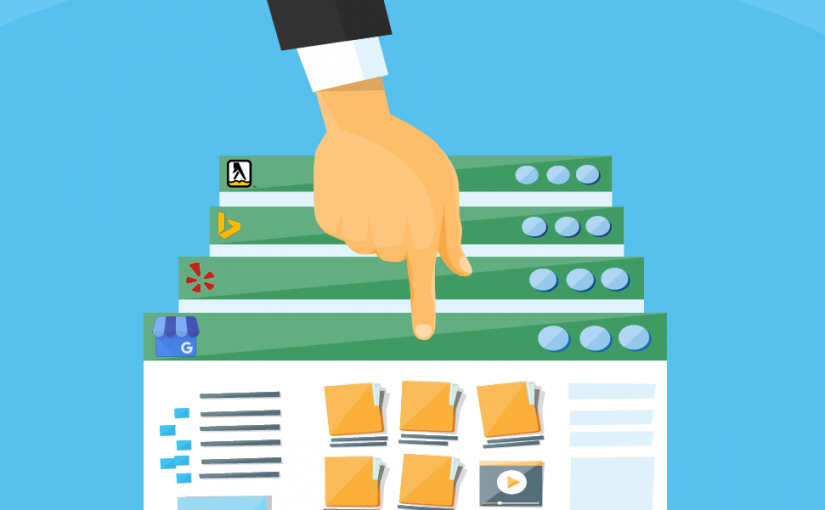
With 85% of consumers browsing online to find your business, it’s more important than ever to be showing present and accurate NAP (name, address, phone number) data in the internet’s hottest spots. For this article, we will narrow our focus on “The Big Four”: Bing, Yelp, YellowPages and Google. These four listing hubs account for 85% of all search traffic and providing businesses with access to 314 million monthly users, these are the listings you want claimed, corrected and working in your favor for free.

(1) Bing

Bing is a big up-and-comer in the digital world. This engine now accounts for 30% of all searches performed online. That’s a huge amount of traffic for local consumers looking for your business. Accessible from Bing Places, getting a business online is as easy as one, two, three!

(2) Yelp

Traditionally known as a review platform, Yelp has evolved into a one-stop-shop for your businesses to manage information and reviews, as well as post photos, promotions and events for your customers all under the roof of one little listing. Yelp is a huge draw to businesses because it has so much to offer and so much traffic! With up to 36.3 million monthly users looking for reputable and trustworthy businesses, wouldn’t it be great to get found on Yelp? Get started now.

(3) YellowPages

Aptly named for its predecessor, YellowPages (or YP as we more affectionately know it) has taken over where the original Yellow Pages left off. With a built-in user base from its paper days, YellowPages has already wormed its way into customer hearts and become a reliable source for listing information. On top of all that, YP has some of the highest US local search numbers in the game, making it the perfect place for your business to get found online. Get started here and get YellowPages working for those local businesses of yours!

(4) Google

“Just Google it” has become a common phrase in most of our daily lives, so it should come as no surprise that its listing source, Google My Business, makes our Big Four. Unique to the other three, Google’s demographic reaches far beyond the female decision makers, 45+ age group, and $60,000+ income earners using Bing, Yelp and YellowPages. In fact, part of Google My Business’ draw is that its listings are seen by everyone who uses Google. With up to 175 million monthly users across every demographic, that’s a pretty big draw.

Not only does Google My Business get you found in searches, but on Google Maps as well! Accounting for 78% of mobile travel usage, if your business isn’t on found on Google My Business, there’s a good chance it’s not getting found in real life either. Don’t send customers driving around in circles; get your businesses on Google my Business now.


Accuracy really is everything

Now that we’ve talked about where to be listed online, let’s talk about how your business information should be listed online—100% accurately! Customers trust Bing, Yelp, YellowPages and Google to give them the correct information they need to find the business they’re looking for, and when the information is incorrect, customers lose major trust in the brand. Not only can inaccurate business listings and inconsistent NAP data diminish your brand, but did you know it can also affect search engine optimization (SEO)? Yep, you read that right! Listings with false location information are the #1 negative local ranking factor when it comes to SEO. So, not only can false listing data make it hard for customers to find you physically, but online, too.

As you can very well see, being present and being accurate where it matters most in online listings is crucial to survival in today’s dog-eat-dog digital world.