
How to Create a Facebook Business Page

Today, it’s really important for businesses, no matter how big or small, to be visible online. One way to do that and connect with your customers is by creating a Facebook Business Page.

We’re going to show you how—step by step—you can make the most of this social media platform.

Key Takeaways

  • Why You Should Have a Facebook Business Page: With over 3 billion monthly active users, Facebook is a vital platform for businesses to engage with local customers and build loyalty.
  • Major Benefits for Local Businesses: A Facebook Business Page offers increased visibility, audience insights, cost-effective marketing/advertising, and valuable business analytics tools.
  • Setting Up Your Facebook Business Page is Easy: By the end of this guide, you will have the fundamental knowledge of how to create a professional-looking and functioning Business Page on Facebook. 

The Importance of a Facebook Business Page

Before diving into the specifics, let’s understand why having a Facebook Business Page is kind of a big deal.

With over 3 billion monthly active users, Facebook provides a vast platform to reach the people you want to connect with (Statista). Your Facebook Business Page serves as a direct hub for online engagement, allowing you to connect with your local audience, share updates, and build customer loyalty.

Overview of the Benefits for Businesses

Now that we have gone over why you should care about having your business on Facebook, let’s go over just a few of the perks of being on the platform:

Increased Visibility

When you have a Facebook Business Page, it can actually boost your chances of showing up in search engine results like Google. This means more people can find you online, even when they’re not on Facebook.

Audience Insights

With a Facebook Business Page, you get access to a treasure trove of information about the people who follow you. Facebook Insights gives you data on things like their age, where they live, and what they like. This knowledge can help you tailor your content to better suit your audience’s preferences and needs.

Cost-Effective Marketing

Facebook has a powerful advertising platform that allows you to create and run ad campaigns. The beauty of this is that you can target these ads specifically to reach the people who are most likely to be interested in your products or services. This means you’re not wasting money on ads that won’t work for your business.

Customer Engagement

Facebook is a very local-centric platform. People use it to swap and sell used goods, share common interests, and create neighborhood community pages. Having a Facebook Business Page gives you the chance to tap into this hyper-local space and interact with your customers directly, where they spend most of their time.

You can respond to comments, feedback, and messages, and even create posts that spark discussions. This engagement helps build a sense of community around your local business and fosters stronger loyalty among your customers.

Setting Up Your Facebook Business Page

Now, let’s get started on creating your Facebook Business Page:

Step 1: Log into Your Personal Facebook Account

Begin by signing in to your personal Facebook account. If you don’t have one, you’ll need to create one before proceeding to the next step.

Step 2: Navigating to the Pages Section

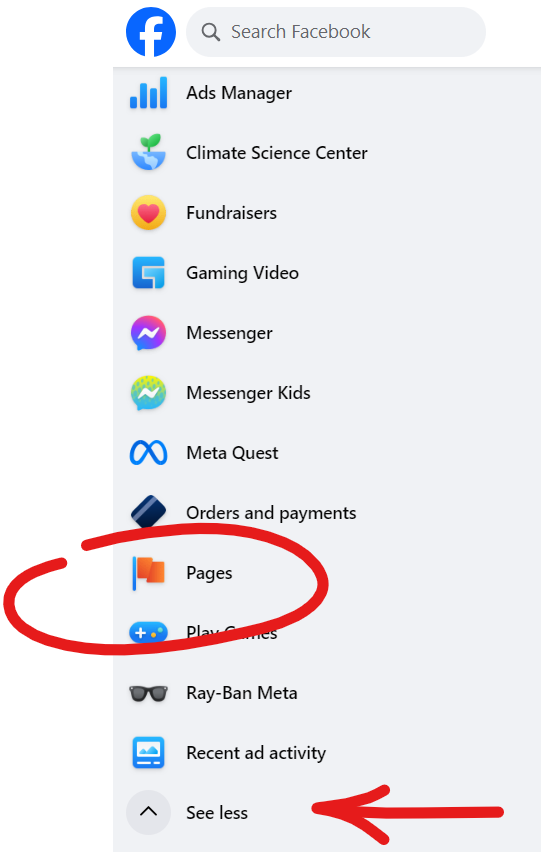
Click on the “Pages” section located in the left sidebar of your Facebook home page. You might have to click “See more” to see the whole list of sidebar options.
How to Create a Facebook Business Page

Step 3: Creating a New Page

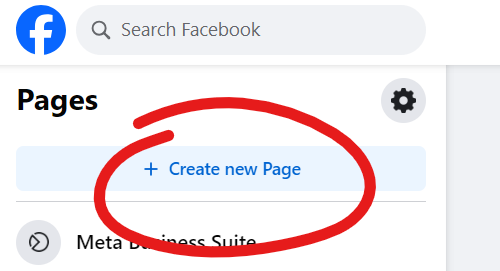
Select “Create” to begin the process. 
How to Create a Facebook Business Page

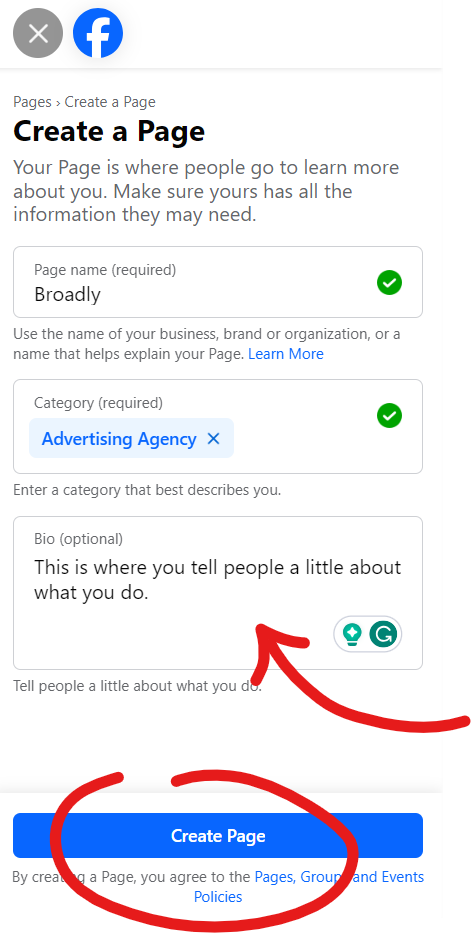
You’ll be prompted to choose a page type that best suits your business, such as “Local Business,” “Company or Organization,” or “Brand or Product.”

We filled out the form to show you what this kind of information should look like. Once you have checked for spelling and accuracy, you can click “Create page.”
How to Create a Facebook Business Page

Congrats! You just made your very own Facebook Business Page!

You might be asking yourself, “Is that really all there is to it?” The short answer is yes! However, to get the most out of your business page, we recommend setting up your page with a few more settings and details. 

Page Configuration and Setup

Now, let’s configure and set up your Facebook Business Page.

Making Updates to Your Contact Information

You can update your business category and fill in important business details, including your business name, description, phone number, address, operating hours, website, email, and more.

If you are worried you made a mistake, no worries! You can always go to the About tab on your main page to adjust the finer details, such as highlighting your service area and adding additional contact info.

Follow steps 1–5 of the set-up process to complete your configuration.

Uploading a Profile Picture and Cover Photo

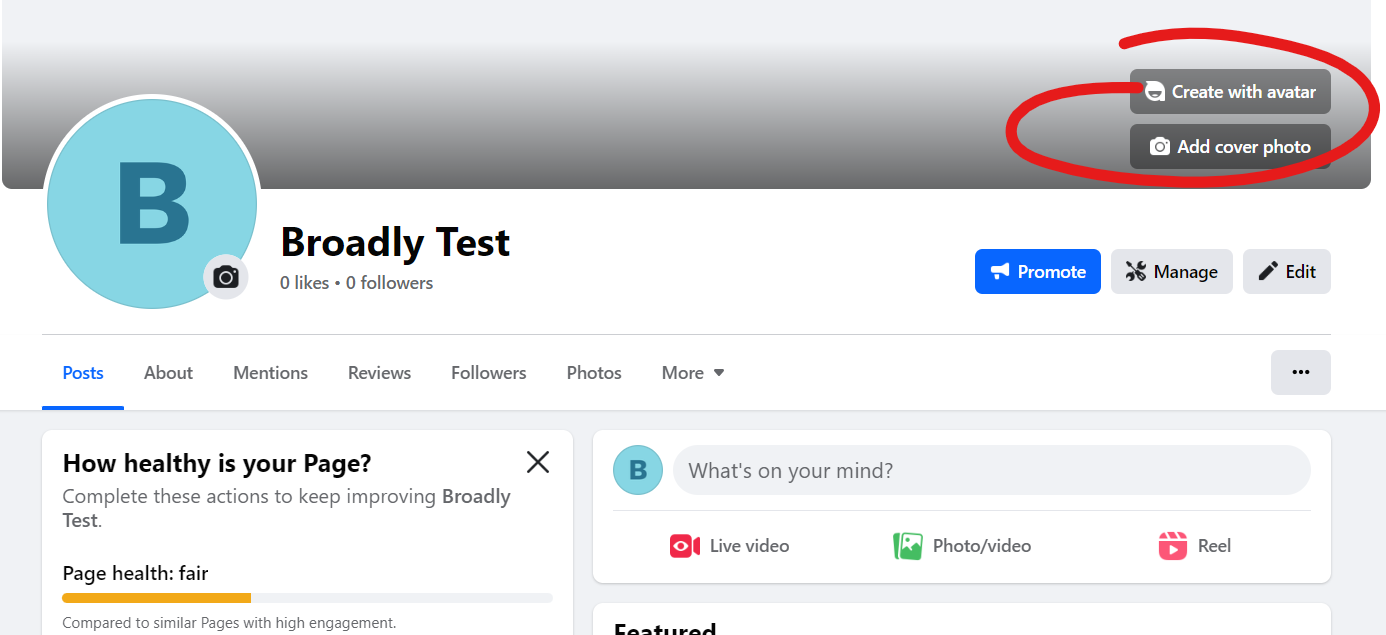
Enhance your page’s visual appeal by uploading a profile picture (usually your logo) and an eye-catching cover photo. This can be done using the buttons found on the far right of your business page.
How to Create a Facebook Business Page

Customizing Your Username (Vanity URL)

Tell us, which URL looks better to you?

Option A: facebook.com/broadly 

Option B: facebook.com/profile.php?id=6155249438286

That’s right, Option A. This version will be much easier for users to remember and can have a hand in helping you better connect with clients looking for you both on and off of the platform. However, when you look up the URL on your new page, you are most likely to see a big jumble of numbers and symbols rather than a perfectly branded link. 

So how can you make your Facebook business link look put together and professional, like your peers? The answer is customizing your username. 

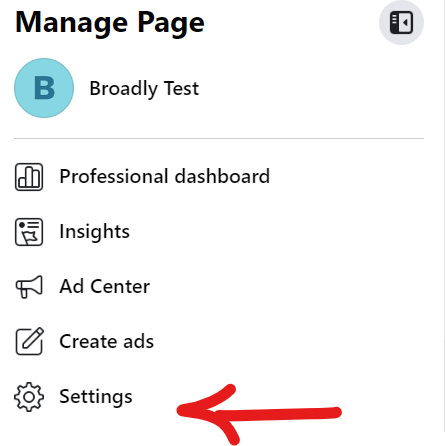
First, navigate to your settings from the main options on the left-hand side of your page.
How to Create a Facebook Business Page

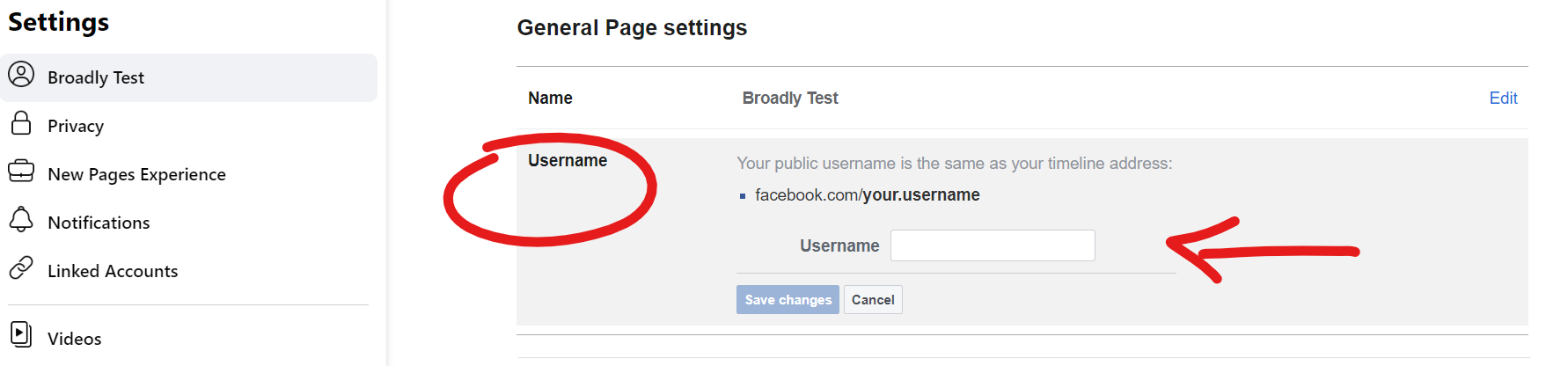
From there, you will see the General Page settings appear. Under the username section, fill in your preferred username to update your custom URL.
How to Create a Facebook Business Page

Hit “Save changes” to complete the process.

Crafting an Appealing About Section

Nothing is more impactful than a well-told origin story. So, what better way to distinguish yourself from the rest than by crafting a compelling About section? You can provide essential information about your business in this space to help users discover why they should do business with you.

Some key things you should mention include: 

A Detailed Business Description

Offer a comprehensive business description that highlights your products, services, and unique selling points.

Highlighting your Mission and Values

Communicate your business’s mission and values to connect with customers who share these common interests.

Accurate Contact Details

Ensure customers can easily reach you by including your website link and other contact details (double-check everything before you save).

Now Engage!

User engagement is key to building a loyal online community. Here are some things you can try to help you hit the ground running:

  • Respond to comments and messages promptly.
  • Encourage user interaction by running polls and hosting contests.

All in all, a well-managed Facebook Business Page is a valuable tool for your local business. By continually updating and engaging with your community, you can foster customer loyalty and drive meaningful growth.

Harness the potential of this hyper-local marketing and advertising tool to take your business to greater heights.

5 Reasons You Need Instagram for Your Business

Instagram has entered the territory of “must” rather than “nice-to-have” when it comes to social marketing for businesses. There are a few key reasons why every business should have an Instagram account, and why you’re going to be pretty left out if you don’t get on this social platform.


1. Skyrocket Your Engagement

The data shows that Instagram is the #1 platform for getting post engagement.

That means that if you want to establish a relationship with your client base (which you do), then you’re going to need that post engagement that only Instagram can provide.

But let’s back it up for a second…

It’s an interesting time to be involved in social media marketing… Facebook is facing major allegations, and as a result—people are doing crazy things like starting movements to delete their Facebook accounts… (For my sake, and the sake of your distant relatives, please do not delete your facebook). As much as internet trolls might have you think that it’s the social media Armageddon, I assure you that life will go on.

It might be looking a little overcast in the internet landscape, but before we pack our bags —there’s still some hope. Facebook’s more charismatic and adopted little brother (Instagram) still has users entranced with its purity and boasts a pristine opportunity for brands who are ready to stir up the marketing pot.

Now, Instagram is the #1 platform for post engagement because its focus on visual content creates a very unique space for brands to interact with others—and if you’re a skeptic, the numbers don’t lie. According to a study conducted by Forrester, Facebook and Twitter organic post engagement levels are currently less than 0.1%. In comparison, the millennial-centric Instagram boasts regular engagement at 4% for brands. (That’s 40x better btw).

instagram stats

2. Grow Your Following with Ease

80 percent of Instagram accounts already follow a business on Instagram, and 65% of top-performing posts feature products. The translation here is obvious, Instagrammers want to see branded content, and they want to connect with brands.

Add the engagement levels for brands (4%) that we just saw and we have the optimal landscape for growing your branded following on this platform.

3. Generate Leads

Instagram is a tool for lead generation.

We know that social media strongly influences purchase decisions, even if that is at the subconscious level of the consumer decision-making process.

It’s 2018, and our favorite lead generation tool (Facebook) is making algorithm changes that are making it harder for brands to get heard. With engagement rates already resting around the 0.1% mark, it just might be the ideal time to expand your reach to include some Instagram marketing.

With Instagram, 60% of users have first heard of a product or service through the platform, and over 120 million Instagram users visited a website, got directions, or called/emailed/direct messaged a business as a result of their engagement with the platform (sproutsocial). That means that 120 million Instagrammers have been lead to a business through the platform.

You can easily use Instagram to generate new business and sales with strategic content and links in your bio, as well as reach new targeted and engaged audiences through paid ad campaigns through the Facebook ad platform.

4. Stay On Top of “Instagram Reviews”

A little-known fact is that when an Instagram user posts something on Instagram and uses a location tag, this tag isn’t owned or regulated by the business that owns the physical location. All location tags on Instagram, or “Instagram Geotags”,” are tied to a separate public account that Instagram will store posts under.

Instagram Reviews

For businesses, this is a blessing and a curse.

Best Case Scenario:

Say you own a local restaurant and you have numerous dedicated and consistent customers who love to post at your restaurant and have nothing but glowing words to accompany beautiful pictures of your space. When others look at your location on Instagram, this is what they see, and they are that much more likely to convert and become loyal customers as well.

Worst Case Scenario:

You own the same local restaurant, but one dissatisfied customer took it upon themselves to post a picture of your front door exclaiming their disgust with the service that they received. This post has lingered on the web and likely dissuaded other customers from posting to the location, and has resulted in the loss of unknown amounts of revenue through prospects who steered away from your business as a result.

Although you have no control over the things that users might be saying about your brand (much like standard reviews), you can still help mitigate some possible damages by having a branded Instagram account and monitoring the posts on your location. Much like negative reviews left on other review platforms, by responding to negative Instagram posts, you are much more likely to prevent harm to your reputation.

5. Don’t Get Left Behind

As of 2017, nearly 71% of businesses in the United States were already using Instagram. The release of Instagram business profiles and the ability to to run ads/analytics with ease have been large factors in driving the Instagram growth movement.

business instagram use
Source: eMarketer

You may notice that this looks like an exponential growth graph, and that’s probably because it is. Fortunately for you, just because 71% of these businesses are using Instagram doesn’t mean that these businesses are using it to its full potential.

We can make a pretty good estimate as to where this usage rate is going to reside by the end of 2018, so don’t get left behind.


Don’t wait, get started on your Instagram strategy today to generate new leads, amplify your brand, and build new business!

What Social Media Monitoring Can Teach You About Your Business

Intro to Social Media Monitoring

Have you ever been at a party and caught a person or a group glancing at you while whispering covertly?

What’s up with that? Is your fly open? Does someone have a crush on you? Does someone want to throw a drink in your face?

You’d want to know, wouldn’t you?

The online universe is a lot like that party; It’s a system of digital communities in which people are gathering and discussing a wide variety of topics, including YOU. In your personal life, you may or may not care to find out what they’re saying, but in business, it’s essential to your survival that you know.

At the party, you may never get the answers you seek without shaking someone down. However, online, you can use social media monitoring to track mentions of your brand, competitors, product and any other keywords that are applicable to your business.

Monitoring your social media channels is about more than just listening.

The information you accumulate can help you make major decisions about your marketing strategy, the products and services you offer and how people regard your brand. Plus, it can help you identify leads, build relationships, stay on top of trends, learn about your competitors, protect your brand and more!

Note: This post is outlining organic social media monitoring tips, as opposed to paid social campaigns. Organic social media is more geared toward building brand awareness and connecting with your target audience. Paid social is typically centered around driving targeted actions like content downloads, webinar or appointment signups, and other specific goals.

Here’s more on why it’s so important that you monitor what people are saying about your business online.


Why Should You Use Social Media Monitoring?

1. To gauge social sentiment

What do you know about your brand’s reputation? You can get a feel by reading your reviews and speaking with customers, but you’d be missing a wealth of more informal brand or product mentions.

Plus, you need to be there to respond! In a recent survey, Sprout Social found that 89% of social messages go ignored. That’s a problem—and an even bigger missed opportunity.

People use social media to discuss the topics they care about within the communities they choose. That’s where you need to listen to truly discover how people regard your business, the issues they’re having, and the things they love.

2. To find leads & build relationships

Are people searching for your products and services? You’ve seen those calls on Facebook for recommendations, or the plaintive cries for help on Twitter: “I want pizza!” When you monitor your brand’s keywords or phrases, you can jump in and answer these requests (Just mention your current Monday 2 for 1 pizza deal!). NOT selling anything can be really effective too. Be a part of the conversations that are happening online about your industry.

3. To stay on top of trends

When you’re closely monitoring discussions in your niche, you may be able to catch new and evolving trends as they emerge. For example, when Instagram launched its “Stories” product, Snapchat growth took a major hit (growth slowed by 82%). In response to news like this, you may decide to alter your marketing strategy to be one of the first to dive into a new social channel or try a new tactic.

snapchat statistics

Image source: Techcrunch

Why is this important? In an over-saturated market, doing the same thing as everyone else can get you lost in the crowd. Finding ways to stand out will help you get noticed and stay relevant in your industry.

4. To perform competitor research

Has your competition launched a product similar to what you offer, but at a lower price or with a few more bells and whistles? Did they just launch a marketing strategy that your customers are loving? Did they just screw up royally using a tactic you’ve been considering? Keeping your finger on the social pulse will alert you about these types of scenarios and unforeseen issues that may have huge repercussions for your business.

5. To protect your brand

Building your brand’s reputation takes a lot of time and effort, but it can all be lost in seconds.Monitoring your social channels allows you to identify any issues customers have and jump on solutions before they blow up.

Stuff happens. It’s inevitable.

It’s how you respond and how quickly you respond that matters. In fact, we’ve found that if a business resolves its issue quickly and efficiently, 95% of unhappy customers return to you.

Listening, identifying the issue and showing your customers you care and are taking steps to resolve the issue is what can turn them from a brand killer into a champion for your business.


What to Do With Your Social Media Monitoring Insights

So once you’re set up with the tools you need for monitoring, tracking, measuring and analysis, what do you do with the information? This is the key moment where you determine how to act on the knowledge you’ve received.

Shift Social Strategy

Is your strategy working? Are you truly getting traction on your primary social channels? You may discover that it’s time to re-evaluate the resources and effort you put into certain channels.

For example, maybe you discover that your people are super engaged in Quora. Devoting more time and resources there would be worth pursuing, even if it’s at the expense of another social channel.

Results from monitoring your competitors on social media could also yield some interesting insights as well. You may find that a new video tactic has people in your area or industry buzzing about a close competitor. Why let them go unchallenged?

Work on Developing Relationships With Leads & Influencers

If you can jump into conversations and authentically solve problems for people, do it! This tactic can be especially relevant when it comes to people’s frustrations with your competitor’s products or services. When you do this, it’s essential that you come from a really genuine place and offer tips or advice geared around helping people. People don’t want to be spammed, and sensitive topics like plastic surgery should be off-limits.

However, in many industries you should feel free to have real conversations with people around the topics they care about (which also happen to be topics YOU care about as a business owner!).

Spotting and reaching out to influencers in your industry as outlined in this post (Salesforce) can have an amazing amplification effect for your brand as well. People look to influencers to help them make purchasing decisions all the time, and if you can develop strong relationships with key influencers you can expect better results for much less work.

salesforce built relationships

Image Source: Salesforce

Develop New Products/Services

Listening to the needs of your target audience is a smart way to refine your solutions and develop new ones. If enough people are saying they hate a product, or wish they could tweak it, it’s probably worth looking into what the issue is and try to determine what could make that product better.

For example, Natalia Chrzanowska of (Brand24) notes that GoPro did exactly that when they introduced their new camera – GoPro Hero4.

“We analyzed the social media discussions regarding both releases – Hero3+ and Hero4. The insights gathered during the Hero3+ premiere included lots of suggestions for features that could improve customer experience, which then appeared later on in the succeeding model – GoPro Hero4.”

On the flip side, if your customers LOVE one of your products, there may be an opportunity to develop similar or complimentary products or services.

You can then turn around and apply all this awesome feedback as testimonials for new campaigns. Think ad campaigns, email campaigns, social campaigns and beyond!

Update Customer Service Policy/Process

Social media has led to a major shift in how customer service is carried out by many companies. People want instant answers, and are less likely to put up with call centers. Many won’t even pick up the phone when they have a problem; They’ll just tweet about it! According to a new report from Conversocial, 54% of customers prefer customer service via social media and SMS. The upcoming generation of millennials will only amplify this trend.

People are sticking to their favorite social media platforms to air out their complaints, and you need to know if this is happening in your industry (and be ready for it).

In Jay Baer’s book Hug Your Haters, author and consultant Dave Kerpen notes that:

“If a customer calls you on the phone to complain, surely you wouldn’t hang up on them. And not responding in social media is akin to hanging up on them, only worse, because there are actually other people watching and listening.”

Letting complains hang out there unanswered is not acceptable to current and potential customers, and it shouldn’t be to you!


4 Easy Wins

I’ve thrown a lot of information you’re way. It’s easy to get overwhelmed and put off testing these strategies for yourself. To help you get started, here are a few easy action items for you to try out.

  1. Jot down 3 of your top goals that you’re hoping monitoring your social channels will help you with. (example: Find out if people are liking the new kombucha flavor we just released).
  2. Contact us to get set up with the social media monitoring tools you need. Poke around and see what value you can get out of the tools.
  3. Enter a few of your brand’s keywords and see what data the tools come up with.
  4. Look through the initial results. Make a list of 3 things you learned and whether you should discuss with your team.

Final Thoughts

Most businesses are aware that they should monitor social media for mentions related to their brand, products, services, competitors and industry. You might actually be doing so already. But do you have a plan in place to analyze, respond and integrate results into your business’s ongoing strategy?

If you don’t, you might be missing some golden opportunities…or you could get a martini in your face!


How to Engage Your Audience Through Social Media

Is your social media falling flat? Don’t sweat it; many hours have gone into perfecting the use of this not-so-secret weapon. Facebook, Google+, Twitter, Pinterest, and Instagram strategies are outlined in detail below. Once you understand how they all work and which will suit your business best, learn how to handle them and other factors such as SEO, reviews, and more!


Facebook, Google+, & Twitter

What works: Images, videos, calls to action, industry-related content, general share-worthy content.
What doesn’t work: Lengthy content, bland content, poor business/related/share-worthy balance.

Videos and images are best used to catch the eye of social media readers, though video works a little better to hold the reader’s attention. Whether it’s redirecting consumers to your website or online store, or getting them to stop and look at an interesting piece of content titled by your business, images and videos are your anchor.

The three best ways to get traction from your readers are to:

  • Get them to go straight to your website or store
  • Get them to like/follow
  • and/or get them to share your content

Let’s say three people see your business posts about that 2 for 1 sale. These posts are not likely to be shared, so those same three people will see all your posts, and that’s it. Once people start liking and sharing your posts, you’ll start to see new eyes on your page. This is where industry related/general share-worthy content comes in.

If you’re a physical therapist, for example, get your readers excited to see and share those workout tips and you’ll have a better chance that someone who needs physical therapy will come across them. Having a good mix of these types of posts is extremely important.

Once you’ve gained the attention of your readers with a photo or video, a call to action is a great way to guide them to their next step.

“Do you like these home renovation ideas? Let’s get started with yours!”

As seen in this above example, calls to action can be used for almost every type of post. Tell your reader to check out your website for a business related post, or tell them to read the article or video you’re sharing. Though industry-related or share-worthy content may not lead your reader straight to your website, the posts are more likely to gain likes and shares.

Packaged in with the importance of shared content is the name of your business. Every time your post is shared, someone new has the chance to see you. That’s brand-recognition, baby! When the time comes for that person to need a lawyer, they’ll remember the interesting law posts you shared and seek out the name they remember seeing or hearing about.

On the other hand, lengthy content, bland posts, and a poor balance of business/industry/shareable don’t work well on these media channels. Lengthy content is an especially bad choice for Twitter’s 140 character count limit. As for Facebook and Google+, people just don’t have the attention spans to read posts that are more than a couple of lines long. Keep them short and concise! Don’t post bland, filler content like, “Happy Friday!” unless people have a reason to share it. “Happy Friday, here’s a hilarious cat meme” can improve brand recognition, but only if shared- use humor to your advantage.

Find your balance between business and shareable content. Too much boring business related posts and calls to action can lead to a stagnant viewer count, while too many share-worthy posts may lead to your readers not knowing what your business does.


Pinterest

What works: Images, videos, industry related content, general share-worthy content.
What doesn’t work: Lengthy content, bland content, and it may not suit your vertical.

Pinterest, like Instagram below, is all about the pictures. If you’ve ever been on Pinterest, you know that it’s a very visual sight to behold. The hook of Pinterest is that people are looking for ideas. This will work best for you if your business provides ideas or the means with which to make ideas happen. A hardware store can benefit from Pinterest because you may share tree-house building ideas with your store’s name attached- don’t forget about brand recognition. Once people get the ideas from you, they’ll come into your store to buy the tools they need for the job! The best use of Pinterest includes non-business related content. Show people ideas that may lead them to your business, but don’t try to sell them right then and there.

However, Pinterest may not suit your vertical, and it definitely won’t prosper with too much emphasis on text. Many verticals such as plumbing just don’t have many corresponding ideas given the nature of the job. In this case, Pinterest can only be used for shareable content and brand recognition. The text attached to Pinterest posts is often ignored, so any applicable text should go into an infographic displayed as an image. That isn’t to say that you shouldn’t use any text. A small headline or message will suffice here.


Instagram

What works: Images, projects.
What doesn’t work: Mostly everything else.

Instagram is a strange beast. The entire point of this medium is to compel readers to follow you and talk about what you offer. This works best for verticals like restaurants because your customers can post images of your food for their friends to see. This also works great for verticals like home improvement. In this vertical, your business can post project and progress images of what you’ve been working on. Seeing these images and sharing them can work well to compel the reader to seek you out.

Instagram posts can’t include links, so just like Pinterest, the aim here is brand recognition. Can you consistently post interesting enough images for your readers to stay interested? Not every business can.


Reviews

Now that we’ve covered the main social media channels, let’s discuss other ways they can be used. Facebook, Google+, and other media channels support reviews. Aside from the engagement from posts, reviews can make or break a business. You may be thinking “I can’t control what people rate my business”, and you’d be right. However, you can control how you respond to people. You can turn around even the angriest rater by replying to their review in a quick and professional manner. See our other articles to learn about the importance of reviews!


Social Listening

Forbes discusses social listening as finding where your audience is discussing topics related to your brand. People are talking about cars somewhere, and these are great topics for your dealership. The short and sweet of this is that you need to be researching your competitors and your peers. What are people talking about, liking, and sharing, and how can you get in on it? You’ll want to shape your social media strategies around what’s getting the best traction everywhere else. Get researching!


SEO

This likely isn’t the first time you’ve read about the importance of SEO, and it definitely won’t be your last. When you search your business’s name or keywords related to your work, how high on the results page does it appear? The more you and your readers are mentioning your name and other keywords in relation to your business, the better your SEO results will be.


Measure Success

Finally, take a step back and look at what you’re doing. Naturally, you’ll want to look for what’s working and what isn’t. Whether you’re counting likes and shares by hand or using Google Analytics to track the information for you, understanding your trends may just be the most important part of the process, so what are you waiting for?

5 Steps To Becoming an Instagram Sensation

300 million—the number of people on Instagram every single day. Businesses are taking advantage of Instagram by using it as a resource to gain popularity and increase their customer base. In fact, top brands like Nike and National Geographic have over 60 million Instagram followers!

So why would any business pass up this opportunity? If you’re not a regular ‘grammer, starting your own page (and growing it) can be overwhelming. The success of your Instagram will be determined by how you run your account. These Instagram tips will help you gain a booming fan following, and lead the way to sensation status.


Instagram Tips #1: #Hashtags

Hashtags could be one of the most important components of gaining popularity on Instagram. Posts that include at least one hashtag have seen up to 12.6% increased engagement. To put it simply, hashtags are a tag that helps categorize photos with the same theme or content.

In your mastery of hashtags, make sure to keep them short, simple and most importantly, relevant. For example, when posting a photo of my fancy new watch, I may use the hashtags #watch, #michaelkors and #rosegold. Short, sweet and descriptive.

If you want to connect to local ‘grammers, hashtags with your location are a good idea. Additionally, many businesses create their own unique hashtag and ask their followers to use it.

For example, Coca-Cola encourages their fans to post Instagram Coke photos with the hashtag #ShareaCoke. This can be a great marketing tool, and help define your brand online.

Another important note to remember is to not over-hashtag, as this can make your posts look spammy, and will actually attract other spam accounts.

Instagram Tips #2: Tag a brand

When you tag another Instagram account in your photos, your photo will show up in the brand’s ‘“photos of you” section of their profile. They will receive a notification, and with any luck, may even engage with your post! Better yet, they could also start following you back, or even re-gram your photo!

Make sure the photo actually features the brand, otherwise you can get flagged for spam. Most big brands will have an Instagram account, and chances are, they probably have an expansive list of followers themselves.

For example, a jeweler could take a photo of a piece from their newest collection, and tag the designer in the photo. Getting some exposure from a big brand could help you significantly increase followers, and in turn, get more likes!

Instagram Tips #3: Use Visually Appealing Photos

Although it seems obvious, this point is oh-so important. You don’t have to be an expert photographer to have a stellar collection of Instagram photos, but you may need some practice. One of the most important bits of advice is to keep it simple. If you are featuring products in a photo, make sure the background is simple so that your product stands out. A cluttered photo will take away from what you are trying to promote. Sometimes, a crisp white background is the best option.

Instagram has many filters to choose from, so take some time to play around with them to see which one suits your photo best! Does your photo look best without a filter? Simply leave it alone! Alternatively, Instagram gives you the option to use their editing tools, where you can make some simple adjustments like brightening or removing shadows, rather than choosing a filter.

Take a few different photos and decide which is the most visually appealing. Taking good photos may take a bit of time, but like anything, practice makes perfect. Don’t give up, and you’ll be taking photos like a pro in no time!

Instagram Tips #4: Know Your Audience

It’s important to remember your audience and who you are targeting with your posts. What is the purpose of your Instagram page? Whether the purpose is to educate, promote or entertain followers, you should keep that in mind with each and every photo and caption. If your account is purely professional, keep it informative and concise. If you are marketing towards a younger audience and want to keep things fun and upbeat, ensure the dialog matches accordingly. Try using some emojis, be goofy and have fun! Show people what you are passionate about, and just remember to target the people with your same interests!

Instagram Tips #5: Ask For It

Your Instagram account is a conversation point with your customers. Most followers scroll through their feed passively, and won’t take any action unless it’s asked of them. Give them a call to action, and ask for it! For example, Double tap if you like coffee, tag a friend who likes coffee, share this photo if you love coffee, click the link in our bio for free coffee, etc. (Can you tell what’s on my mind right now?) If your customers oblige, this will increase your page’s activity, likes, and followers.


Most importantly, don’t forget to have a little bit of fun! Happy ‘grammin!

Copyright Online and Fair Use in Social Media

With the online world being dominated by images, what do you need to know as a business owner when it comes to copyright laws?

Sharing Images on Social

Visuals are huge in the social media world, particularly for businesses. Here’s a quick run-down.

  1. On average, content with relevant images has 94% more total views than content without (Jeff Bullas)
  2. Compared to other types of content, visual content is 40x more likely to be shared on social media (Ethos3)
  3. Facebook posts with images can receive 2.3x more engagement than text posts (BuzzSumo)

A couple things can be seen here. First, using images in your social media communications is critical to its success, and second, social media is the driving force behind the unfathomable amount of photos being shared online every second. In fact, the world is on track to share over 2.5 trillion photos online by the end of this year!

Social Media Copyright Risks

Because online culture evolves so quickly, the laws of the land are constantly readjusting to the most recent trends in online activity. This is especially true regarding copyright online and fair use on social media, both of which have yet to become clearly defined for the digital age. Fortunately, even online, by sticking to the basic foundations of copyright law you will be protected in most cases

💡 This post focuses on copyright laws as they pertain to Canada and the United States.

What is Copyright?

Simply put, copyright is: “the exclusive legal right to reproduce, publish, sell, or distribute the matter and form of something (as a literary, musical, or artistic work).” Its purpose is to strike a balance between protecting the author of a work, and serving the public interest.

Copyright offers the owner exclusive rights over their work. Copyright owners can:

  • Reproduce the copyrighted work
  • Create derivative works based on the copyrighted work
  • Distribute copies of the copyrighted work to the public by sale, transfer of ownership, rental, lease, or lending
  • Perform and/or display the copyrighted work publicly (copyright.gov)

Copyright is determined on a case-by-case basis, which makes it difficult to identify any clear-cut examples of infringement that could be applied to other cases seen in social media.

Creative Commons and Free Use

On the other end of the spectrum, “creative commons” work is always free to use. This dedication means that an author has dedicated their original work to the public domain, waiving all rights to their work worldwide under copyright law.

This work is free to “copy, modify, distribute and perform, even for commercial purposes, all without asking permission” (Creative Commons). Sites like Pixabay or Flickr find photos that are released under Creative Commons! These photos require no attribution (credit to the author/source) and they are free to use.

Internet Memes and Copyright Online

There are so many kinds of memes that may or may not infringe copyright online that lumping them all into one category and stamping them with “approved” or “rejected” ink just doesn’t work. If you are curious about how the memes you might be sharing fall under copyright law, here is a quick guide.

Types of Memes

Memes can range from the popular “image macros,” to silly sentences repeated across the web. Obviously, catch phrases, hashtags and other word-based memes have no real copyright risk. It’s the visual and image macro memes that may pose a problem. Specifically, image macros that depict copyrighted characters and productions.

Pop Culture Memes

Let’s say, for simplicity’s sake, that most memes are fair use. I mean, no one is going to come after you for throwing a “damn, Daniel!” into one of your Facebook posts. The memes that may pose an issue are those that pull images from pop culture, like Futurama Fry or Boromir’s “one does not simply” meme. These character stills are pulled from pop culture media and turned into memes, yet the characters depicted are owned by a specific brand or company.

Could using a pop culture meme that depicts a copyrighted work or character result in a lawsuit? Yes.

Is it likely to? No.

But when it comes to commercial use of memes, it’s good to err on the side of caution, and avoid posting pop culture memes that clearly depict copyrighted works.

Memes in Social Advertising

Using memes for social advertising is the surest way to cause problems with copyright when it comes to sharing memes. Posting a meme is relatively harmless, but using it in advertising is a whole different story.

Advertising is not protected by fair use, and so any direct promotion of your company/brand with the use of memes, or using memes for profit, can get you legal heat.

If you’re thinking “that’s silly, who would punish me for selling a t-shirt with a picture of a particularly grumpy cat?” I understand where you’re coming from, but Grumpy Cat has a company that’s ready to protect its property (which is, weirdly enough, a mean looking cat).

General Rule for Copyright Online

Even though the rules of fair use and copyright online are often left up to interpretation, a good rule to follow is assuming that all images and videos found online are protected by copyright, unless explicitly expressed as being free to use by the owner. Ultimately, it’s up to the author of the work to enforce copyright law if they find that their work is being used without permission.

The next time you decide to use any content that isn’t yours, ask yourself:

  1. Do I have permission to use this image (or is it free to use)?
  2. If not, does my usage fall under “fair use”?
  3. Is using this content worth the potential legal consequences?

It will be interesting to see how copyright laws and content sharing practices will change with the evolution of social media trends. For now, just remember—a picture may be worth a thousand words, but it may cost you a lot more if used without permission.

How to #Hashtag

How hashtags can help you reach the out-crowd and engage the in-crowd

The facts are in: if you are not using hashtags, you are missing out! With a tweet with hashtags being 33% more likely to get retweeted, these handy hashtags can make the difference between #GameOver and #Trending when it comes to social media success. Hashtags are more than just a fad, they are a means of organizing information and standing out from the crowd. Hashtags are also a way to engage with millennials where they shine brightest – through social media savvy. With millennials beginning to outnumber previous generations, speaking their language has become increasingly important. Do not miss out on this opportunity to #GetSocial!


Hashtag basics

The hashtag (#) turns any word, or group of words, into a link that can be searched. When writing a hashtag, leave your grammar at the door – no punctuation, no spaces! The best way to keep your message clear is to capitalize each word #LikeThis, otherwise known as using CamelCase. Got it? Let’s move on!

There are two ways businesses can use hashtags to their advantage.

  1. To reach the out-crowd by joining a conversation that is already in progress.
  2. To engage the in-crowd by starting a new conversation.

Reaching the out-crowd

As a business, using hashtags to reach potential new customers is a no-brainer. How do you do this effectively? By joining a conversation that is already in progress! Start thinking about what words people would search when looking for a business like yours. If you don’t know where to start, remember the old saying, “Keep your friends close, and your competitors closer”! Follow businesses who are doing similar work to you on all your favorite social media websites – especially those who have a great following. What hashtags are they using, and how many? Keep in mind that less is more both in scope (as hashtags that are more niche have a more engaged following) and in presentation (as too many hashtags looks inauthentic).

For example, this, “Take a bite out of our best burger today! #BurgerLover #Foodie #CheatMeal” is better than this, “Take a bite out of our best burger today! #WhatsForDinner #Foodie #EatClean #CommonTable #OnMyTable #TasteMade #ForkYea #OnTheTable #FoodStyling #BeautifulCuisines #HeresMyFood #TheArtOfSlowLiving #FreshFoods #CheatMeal #BurgerLover #Foodstagram #BurgerLife”.

So, K.I.S.S. – Keep It Simple Social-Media-User! Using hashtags by joining a pre-existing conversation takes your business and puts it in front of someone who would have never found you otherwise. That’s something you can feel #Blessed about!


Engaging the in-crowd

The second way that you can use hashtags to build your business is by starting a conversation with the followers that you already have by creating an original hashtag. Brands from Calvin Klein (#MyCalvins) to Charmin toilet paper (#TweetFromTheSeat) have managed to create original hashtags that engage their audience in a way that builds their social media momentum. Original hashtags can be used for promotions, contests, events, or general brand awareness. Just be sure that when you are creating an original hashtag that it is clear, simple, unique, and catchy. No one will want to join your conversation if it’s confusing or boring.

Imagine if Coca-Cola’s classic #ShareACoke hashtag was #TakeACocaColaAndGiveItToSomeoneElse – not very fun or memorable! Original hashtags give your followers something to talk about and a way to interact with your business on a personal level.


Not all social media sites are created equal

Using hashtags is not a one-size-fits-all solution. Each platform will have its unspoken rules of how many hashtags are acceptable. Where Instagram shows posts with an average of nine hashtags performing the best, Facebook posts get the greatest engagement with only one hashtag. Each social media site is unique in its function and audience, so take the time to explore the sites you want to use for your business before posting.


Are you #Trending yet?

These tips and tricks for how to use hashtags as a business are about more than getting ahead in a technological age. Hashtags, above all, are about building community. By putting a simple pound sign in front of a word, you are taking that message and immediately sharing it with someone who cares about what you do and how you do it. This tool is a revolutionary way to make your words matter and allow them to connect with not only a new customer, but a new spokesperson for your business. From #MotivationalMonday to #FlashbackFriday, use your new hashtagging skills to make both the in-crowd and the out-crowd your new #BFFL.

7 Social Media Tactics for Businesses That Struggle With Social

A strong social media presence is one of the best ways to be heard, and businesses are no exception to this rule. Forget the doorstep; there’s a whole world of potential customers and fans at your fingertips who are actively looking for brands that they can identify and engage with on a personal level. However, social media skills have to be learned, and many businesses struggle to find an audience and connect with them online. If yours is one of them, what can you do to make the best use of social media and all its benefits? How can you create content that gets people to stop scrolling and start reading, liking and sharing?

These 7 social media strategies will help your business build a presence and a following in the most crowded rooms online by creating content that entertains, educates, inspires and engages.


1. Make a plan

Before you rethink your entire social strategy, ask the tough questions. What are your goals as a business, and how will a strong social media presence help you to achieve them? What actions are you going to take to build presence, and how will you measure your success? Establish achievable and quantifiable objectives that are informed by your marketing and business goals, and put a time-frame on how long they should take to achieve. Find the right KPIs and tools to evaluate your progress, and don’t be afraid to change your tactics if something isn’t working.

And remember: don’t throw the baby out with the bathwater! If you’ve done something in the past that worked well, think about how and why it worked, and let it inform your strategy as you go forward. Similarly, look to past failures and learn from them: how have your past social efforts missed the mark, and how can you avoid these mistakes going forward?

With a roadmap to social success in place, your business can begin to make guided changes to its social strategy that work toward definite goals.


2. Know your audience

There are so many eyes and ears out there on the web, but do you know who is going to listen to your brand’s voice? Identifying and empathizing with your demographic and how they spend their time online makes a huge difference in making your voice heard. Picture your ideal customer. What interests them? What are they passionate about? What do they read, watch, and talk about with their friends? What are their goals, and how can the things you do help to achieve them? The better an understanding you have of your ideal customer, the easier it will be to find people like them online and speak to them with your content.

Listen to your audience and their conversations online about your industry in general and your brand in particular. Find the keywords and phrases in these conversations, learn how they’re used, and put them into practice in your own content. These keywords, which can include anything from industry jargon to misspellings of your company’s name, make up the language that your customers speak – to walk the walk, your business needs to talk the talk.

Finally, knowing the social media influencers your audience follows and engaging with the things that interest them can put you straight into your audience’s line of sight. Learn from what influencers do to engage your audience, and put it into practice in your own social media strategy.


3. Tell your story

Just like every person, every business has a story; no two are alike. Use your social media channels to build a narrative around your business that shows how it got to where it is today. Invite your audience to think about where they enter into that narrative: how are your followers involved and invested in your success? How can the things your business does change a person’s day, or change the way they live their lives?

One way to nail a narrative is to find your niche and own it. If your service or product fits into a certain lifestyle, build a story around it, and highlight your place in it. You know the unique value of your business – tell the world about it, and appeal to an audience that will benefit from it.


4. Get conversational

Social media is a two-way street, and driving engagement with your brand means taking hold of the reins and engaging with your audience. Make your business part of the conversation online by asking and answering questions, making friends, and following back. Things don’t always have to be about sales: sharing holiday greetings, discussing local events, and starting a dialogue about current news stories are all ways a business can drive engagement from their audience and learn more about their demographic.

Most importantly, share with your audience and encourage them to share with you! Ask your audience about what they want to see, take the feedback and deliver on it. If you see someone doing something cool with your product or sharing a success story, like it, retweet it, or give a shout out! When your audience is engaged with your brand, you become a part of their network, and everyone gets to see how your business fits into the lives of people just like them. This widens your audience and compounds your chances of generating engagement.


5. Go live!

Facebook Live has quickly become a powerhouse marketing tool for the biggest brands. Your followers are notified the moment you go live, and can join at any time to watch you broadcast the things that matter to the both of you. Is your company reaching a milestone, or releasing a brand new product? Has your warehouse just received a long-awaited and much anticipated shipment? Go live, and share the moment with your fans! Hold a live Q&A session, give fans a sneak peek at exciting things in the works, or simply broadcast a day in the life of an employee. When your fans see the real people behind your products or services and share in their successes, it lays the foundation for a fanbase that is engaged, loyal, and eager to see more!


6. Call to action

Make your statements short and sweet, and provide a way for your audience to follow up and learn more. Succinctness is a virtue and brevity is the soul of wit, especially in the fast-paced world of social media, and many social media platforms have embraced this philosophy to the point of integrating it into the very nature of user interaction. Twitter’s 140-character limit is an obvious example, but Snapchat’s ephemeral photos and videos and Instagram’s bite-sized Boomerang and Stories features are more recent examples. These limitations allow you to create captivating copy and striking visuals that inspire interest and are digested at a glance. Once you have their attention, encourage users to follow up by clicking a link, signing up for an email newsletter, or looking through a complete product line to get more of the content that hooked them!


7. Testing, testing, 1, 2, 3…

Finally, always be improving. Don’t focus on a single successful formula and stick to it. Variety is the spice of life, so keep an eye out for new trends, new conversations, and new mediums to get your message out there – but be scientific about it. Keep your eyes on the KPIs, put your strategies to the test by comparing their results, and learn from your failures as well as your successes to evolve along with your audience and your social media networks as they grow.


To wrap things up

The world of social media is constantly evolving, and with these tactics your business will find its place in the world beyond a brick and mortar shop or a domain name. Take stock of how far you’ve come, and set clear and measurable objectives that correspond to your business goals. Get to know your audience, tell them your story, and get involved by listening to what they have to say. Go live, give your followers a taste of what you have to offer, and provide the means for them to learn more about what you can do for them. Always pay attention to what works, learn from what doesn’t, and test out new ideas to keep improving your reach. Most importantly, remember the point of social media: to connect people! Use your social media channels as a platform to connect to and grow your audience, not just as a megaphone to talk at them. Now get out there and give the people something to talk about!

Why is Social Media Important?

Since the early 2000s, social media platforms have revolutionized the way people connect with one another. Today, there are 2.3 billion active users of social media worldwide. Business owners who take advantage of the ocean-sized lead pool created by social media channels will undoubtedly reel in a boatload of benefits.

Currently, the number of brands present on two or more social media platforms has surpassed 90%, and in 2016, Facebook reported reaching 50 million small business users. Despite this level of online presence, business owners consistently report that social media is the second most difficult marketing tactic to execute effectively (immediately behind Search Engine Optimization, AKA SEO). Business owners believe that learning how to properly utilize social media platforms is time consuming, and that their time would be better spent on other marketing tactics.


Don’t take the bait—social media IS important!

Remember the boatload of benefits discussed earlier? We didn’t mean this:

Making the effort to rock your customers’ worlds through the effective use of social media will pay off for your business, here’s how!

Social media increases your brand’s visibility

Just as there are plenty of fish in the social media sea, there are also a TON of boats looking to land a big catch. Ensuring your business and brand are present and active on multiple social channels will create the opportunity for consumers from different demographics to find and follow you. Also, half of consumers follow brands to indicate their loyalty, so a business’s current customer base will also increase brand awareness and visibility. The more followers a business has, the more likely it is to be seen. Additionally, if a business owner treats these followers as a sentient community rather than a stagnant lead pool, it will help improve customer service and brand image.

Social media improves your customer service

A business’s presence on social media creates the opportunity for dialogue with consumers, and 60% of followers expect a brand to interact with their followers directly through social media. With more than half of marketers utilizing social media as two-way street for communication, it is important for business owners to give their audience what it wants. By providing engaging content, exclusive social offers and genuine responses to feedback like reviews or questions, you will be able to build brand loyalty and lasting customer relationships with your social community. Did we mention that all of this comes with a minimal price tag?

Social media is easy on your budget

Old school marketing tactics like snail mail ads or flyers can be expensive, and it will undoubtedly take time to measure their ROI. Joining and posting to social media is free of charge—there’s no limit to how many posts you can publish, and your efforts are seen by followers immediately. Paid advertising on social media is also an option, and this tactic will allow you to target specific audiences you want to reach. The best part is that your budget for paid social advertising can be as large or as small as you see fit, it’s all designed to meet your business’s unique marketing needs. Investing in social media with time or money can help with more than just a business’s social accounts, too.

Social media can boost search engine ranking

Effective social media use will allow your business to harness the power of another internet beast.

You may recall from earlier that business owners find SEO to be the most daunting digital marketing tactic to take on. By fostering a social media following, providing content that will likely be shared, and interacting with its consumers online, businesses are able to climb the ranks in search engines. The better your ranking, the more likely you are to be found, and thus the social media cycle begins all over again!


Keep the fish biting

With so many benefits tied to using social media, you’re probably wondering how to move your business forward using such a powerful tool. Posting in social channels can be intimidating, and oftentimes you might be left wondering if you have anything worth posting at all.

Teach a marketer to fish…

It’s important to create social media content that provides value to your customers without hocking spam day in and day out. To succeed on social media you need to know your consumers and keep them entertained. Don’t have time to test the waters?

Creating the Perfect Social Post

What makes for good social posting, anyway? In order to craft the perfect social post, we need to take a look at why people follow businesses in the first place.

  • Interest in services and promotions: People love sales! Don’t get TOO excited though. Over posting this information is also one of the leading reasons people unfollow a business.
  • Updates and information: People are interested in what your business is up to! Have new products? Moving locations? Getting an office dog? Post it!
  • Communication: Social media is for connecting. People want to talk to you, and they want to review your products and services. Make sure you’re responding to them: it shows you care about your customers.
  • Entertainment: Are you not entertained? People use social media to get a break from their humdrum day. Post content that will put a smile on their faces or give them something to think about. Hint: it doesn’t always have to be related to your business.

So now that we’ve got a good idea of what people want to see, how do we make the magic happen? When I write social posts, I use three main guidelines to direct me.


The 3 Golden Rules of Local Social Media Marketing

  • Does it provide value? People engage with content that is relevant to them. Consider whether the post is solving a problem, starting a conversation or educating. People love to share information that is new and exciting. In order to provide the best value to your followers and customers, the vast majority (up to 80%) of your content should be useful or engaging information. In fact, posts promoting the business should only account for 10%-20% of the content.
  • Is it emotionally engaging? People love stories, and they share content they connect with. Don’t be afraid to show the more personal side of your business. Really, who hasn’t teared up during a Coke ad or giggled at the Budweiser Clydesdales? Brands that go the extra mile to create an emotional connection with their customers stick in their memories longer. Why not post a cat video? Everyone loves a cat video.
  • Is it visually stimulating? 1200 pixels are worth 1000 words. We’re talking high quality photos, videos and infographics here! Posts that include visuals get way more (almost 650% more) engagement than those without. Keep in mind that not all visuals are created equal. The best ones are the ones that you take yourself, because they’re local, personal and relevant. If you don’t have the capacity to take photos, reposting from other websites and profiles is a great way to keep your page relevant. Quality stock photos are also great resources, just make sure to pay attention to copyright!

Creating content for social media is essential—you need to be present where your customers are, and they’re on social. While it is free to partake, creating an effective social media strategy and sticking to it takes diligence and determination.